
Rapajic: Changing Chapter 35 would pose a problem; for Serbs, the most important thing is the formation of the CSM
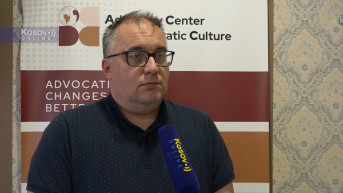
The announcement that the European Union could include the Ohrid Agreement as a part of Chapter 35 on Serbia's path to the EU could lead to the establishment of the CSM but could also worsen Belgrade's negotiating position in talks with Pristina, Aleksandar Rapajic, the Program Director of the NGO "ACDC" from North Mitrovica believes.
Rapajic, in a statement to Kosovo Online, says that Chapter 35 is specific to accession negotiations for countries wishing to join the European Union, as it encompasses all current issues during the accession negotiations. He notes that it is particularly specific to Serbia because fulfilling this Chapter depends on other factors, especially the dialogue and Pristina.
"As far as technical matters are concerned, Chapter 35 can always be modified. This Chapter serves to incorporate things that happen during negotiations. It has always had an undefined category to seek progress in the negotiations between Belgrade and Pristina, meaning this progress may now be defined in some way. But is it good? I think it's not good to do that at this moment. This item that exists for Serbia is specific because it depends not only on what Belgrade does, but Serbia has a negotiation process in which it cannot act alone. Action from an external party is expected, and if Serbia conditions itself with solutions from the Ohrid Agreement or the Franco-German proposal, which was not officially adopted by Serbia in the end, then it would be an imposed solution", Rapajic says.
Rapajic believes that the formation of the CSM is essential for the Serbs in Kosovo, but any potential change to Chapter 35 would pose a problem for Serbia.
"For us in Kosovo, the Community of Serb-majority Municipalities is currently the most important. If this Ohrid Agreement leads to that, I think the position of the people living in Kosovo will improve, but it will worsen Serbia's position in the negotiation process in the sense that it will put a new demand in front of Serbia, requiring it to sign something at the end of this European path. Even though it was not explicitly stated in Chapter 35, it could be inferred that it would be one of the European Union's demands", Rapajic believes.
He emphasizes that from the beginning, the position of officials from countries within the European Union has been that the end of the European process must be some agreement between Belgrade and Pristina.
"Those countries that have recognized Kosovo see that agreement as a kind of recognition of Kosovo, while Serbia's position from the beginning of the negotiation process has been that this is not possible, and no one will do it. So, the positions have been so different from the very beginning, and nothing has changed in the meantime", Rapajic concluded.

0 comments