
Reeker: The length of the sentence surprised me, this is not a matter of collective responsibility
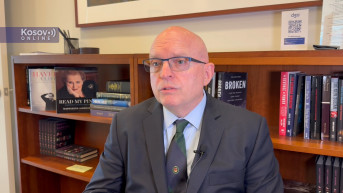
Former US Assistant Secretary of State for European and Eurasian Affairs Philip Reeker tells Kosovo Online that he was surprised by the length of the sentence handed down to the former KLA leaders, and that an appeals process will now follow, after which it will be seen what the outcome of that process will be.
Reeker says it is not for him to say whether the judgment itself was fair.
“The judgment is the judgment. This is a process being conducted before an institution established specifically for that purpose. I know that there is a sense of injustice in the region, as well as among many people. We can see that this feeling is now being expressed. But, as I said, I think we should look at the process ahead, which includes an appeals process, and see where that process ultimately takes us. What is important, in my view, is to think about the future of the region, the future of Kosovo, the future of Serbia, the future of the entire Balkans and Europe. I have long hoped that we would see real progress in that direction. Unfortunately, that progress has been very slow. I am not sure that this judgment or this process is helping us move in that direction,” Reeker says.
Regarding the reaction that followed in Pristina after the judgment was announced, Reeker says that many people feel there has been an injustice.
“It is important to keep in mind that this is part of the process. There is an opportunity to appeal. I am sure that process is already underway. This concerns individual responsibility, as determined by the court. This is not a matter of collective responsibility,” he says.
The ambassador further states that people in the region should think about their broader future and how they can work together.
“You will not change history. You will not change geography or the reality of the region. A better solution is to find a way forward so that all people in the region can live in safer and more prosperous conditions and work toward their future, as well as the future of their children and grandchildren,” our interlocutor explains.
Asked what this judgment means in political terms for Kosovo and Serbia, Reeker says:
“The political significance of this judgment will be felt by the people in those countries. It is not for me to describe what its impact will be. We are already seeing reactions to this in different parts of the region. Clearly, different people have different reactions. I think it is important to look at the bigger picture and think about how countries can find a way to move forward. The process is, and should be, a process of finding peace and a way to live together. Again, you cannot change geography. You cannot change history.”
Reeker further says that “what we need instead is to see an opportunity for people from all the countries of the region to move forward, particularly on their path toward Euro-Atlantic integration, which all the countries have described as a path toward greater stability, greater security and prosperity.”
“There will be those who want to see instability in the region. There will also be those who will encourage it. It is the responsibility of leaders to try to call for calm, to allow the appeals processes to take place and, hopefully, to encourage leaders on all sides to work together to find long-term solutions. There is no doubt that this will have an impact on all these things. There will be reactions. We are already seeing them. It is up to people to think about the broader path that should be followed, and expressing reactions and feelings of injustice in this process, which we are now seeing in many cases, should not be an excuse for violence. There has been enough violence in this region over the past decades and centuries. It is time to truly move forward toward something more stable. That is precisely what the dialogue between Pristina and Belgrade was intended to achieve. When I worked on this, together with Baroness Catherine Ashton of the European Union, more than a decade ago, that is precisely what we were trying to achieve, and we made some progress with the 2013 agreement – the Brussels Agreement. Unfortunately, in the more than a decade since then, we have not seen further progress. I would hope that people can take a step back, think about what all of this means and try to find a way forward, so that none of this is regarded as having been in vain and so that all people in the region can have a brighter future,” Philip Reeker concluded.

0 comments