
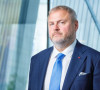
Report by Riho Terras before members of the European Parliament: Dialogue has not yielded results, Kosovo should establish the CSM
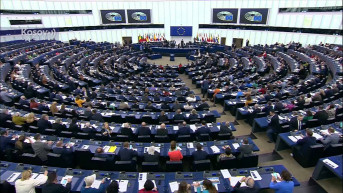
The dialogue between Kosovo and Serbia, initiated to find a mutually acceptable compromise, has unfortunately not produced the expected results, notes the European Parliament’s rapporteur for Kosovo, Riho Terras, in the report that will be presented to Members of the European Parliament tomorrow. The document emphasizes that the new European Commission, as well as the European Parliament and Member States, must do everything in their power to ensure the dialogue between Pristina and Belgrade continues with renewed energy. The appointment of a new EU Special Representative, Peter Sørensen, is described as a welcome development.
The report reiterates the importance of constructive engagement by both Kosovo and Serbia to reach a comprehensive, legally binding agreement on normalization, based on mutual recognition and in accordance with international law.
It calls on Kosovo and Serbia to implement the Brussels and Ohrid Agreements, including the establishment of the Community of Serb-Majority Municipalities (CSM), and for Serbia to cease opposing Kosovo’s membership in regional and international organizations. Both parties are urged to refrain from unilateral actions that could undermine the dialogue process.
Terras acknowledges in the report that Kosovo made significant progress in 2023 and 2024 in electoral reform, economic resilience, and protection of fundamental rights, although challenges remain in judicial reform, media freedom, public administration efficiency, and the digitalization of public services.
The report underscores that continued commitment to comprehensive reforms and inclusive governance is essential for Kosovo’s progress on its European integration path.
It also praises Kosovo’s commitment to EU accession, expressing “strong belief that Kosovo’s future lies within the EU, and that all efforts to bring Kosovo out of the ‘gray zone’ serve the interests of both its citizens and the Union—especially in light of current geopolitical dynamics in the region, rapid global changes, and growing competition from authoritarian regimes.”
Terras expresses support for Kosovo’s EU membership bid, reiterating the call for EU Member States in the Council to authorize the Commission to issue its questionnaire and deliver its opinion on the merits of the application. He also calls on the five EU Member States that have not recognized Kosovo’s independence to “do so without delay,” thereby enabling Kosovo to progress toward EU membership, reminding that the Advisory Opinion of the International Court of Justice dated 22 July 2010 stated that Kosovo’s unilateral declaration of independence did not violate general international law.
The report notes progress in the areas of justice, freedom, and security, the fight against organized crime, and the development of a functioning market economy. However, it also laments the limited progress and calls for an acceleration of reforms in the rule of law sector.
Regret is expressed over the politicization of institutions such as the Central Election Commission and the Independent Media Commission.
Kosovo’s continued alignment with the EU’s Common Foreign and Security Policy is praised, particularly “its strong condemnation of Russia’s aggression against Ukraine and implementation of EU restrictive measures against Russia and Belarus, in line with EU foreign policy,” as well as its humanitarian and military support packages for Ukraine.
Terras calls for the immediate lifting of EU measures against Kosovo, stating they are no longer justified and are “in stark contrast to Kosovo’s proven commitment to European values and alignment with EU policies, while also limiting the impact of the EU’s partnership with Kosovo and hindering the continuation of the dialogue between Belgrade and Pristina in good faith.”
He reiterates support for Kosovo’s request to join the Council of Europe.
The report welcomes the participation of Kosovo Serbs in the parliamentary elections and encourages their elected representatives to play an active role in Kosovo’s legislative framework. However, it regrets the boycott by Kosovo Serb parties during the April 2023 local elections and the withdrawal of Kosovo Serbs from Kosovo’s institutions.
It “expresses concern over Serbia’s interference in the parliamentary elections through the Serb List,” but also welcomes the implementation of the 2016 Constitutional Court ruling recognizing the Visoki Decani Monastery as the legitimate owner of its land.
Terras condemns serious security incidents in northern Kosovo in late November 2024, highlighting the most severe act near the village of Vrage in Zubin Potok, where explosive devices damaged critical infrastructure targeting the main Ibar-Lepenac canal. He expresses support for Kosovo’s institutions in conducting a full investigation and bringing the perpetrators to justice.
The report regrets the lack of a clear plan for the engagement of Kosovo Serbs in the north and the still very limited initiatives to include the Serbian community in Kosovo’s political, social, and economic structures. It repeats the call for improved internal dialogue and genuine, direct engagement with independent civil society organizations representing Kosovo Serbs—especially in the north—with the aim of building trust, facilitating daily life, and achieving successful integration, reconciliation, and good neighborly relations.
“It is expected that both Kosovo and Serbia fully cooperate and take all necessary measures to arrest and swiftly bring to justice the perpetrators of the terrorist attack in Banjska in 2023,” the report says, expressing regret that Serbia has not yet prosecuted those responsible—particularly Milan Radoicic, Vice President of the Serb List.
The establishment of the Joint Commission on Missing Persons is welcomed, with a call for swift progress in implementing the Political Declaration on Missing Persons from May 2023. Both sides are urged to refrain from politicizing this humanitarian issue and to intensify efforts as part of the dialogue between Belgrade and Pristina.
Finally, the report welcomes Kosovo’s decision to lift restrictions on the import of finished goods from Serbia at the Merdare crossing, and recognizes the role of the Kosovo Security Forces in building and maintaining a safe and secure environment and developing a stable and peaceful Kosovo on the path to Euro-Atlantic integration. It emphasizes the importance of continued mission support for the development of the Kosovo Security Forces through advice, training, and capacity building.
0 comments