
Research: Serbs want an agreement if it excludes recognition of Kosovo and a seat in the UN
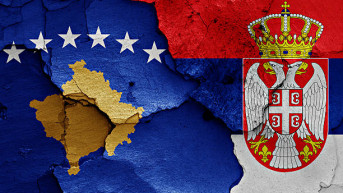
As many as 57 percent of citizens believed that Serbia should accept the Franco-German plan if it excluded the formal recognition of Kosovo and its membership in the United Nations. On the other hand, as many as 80 percent of citizens were against that proposal if that document would imply the recognition of Kosovo and its entry into the UN - the latest survey by the "Faktor plus" agency showed, Blic reports.
The study was conducted on a representative sample of 1,100 respondents, and the agency "Faktor plus" says that the marginal error is in the range of minus or plus three percent.
The research, among other things, reveals under what conditions the citizens of Serbia would accept a new agreement with Pristina based on the Franco-German proposal, with the results of the research showing that only every fifth citizen is familiar with the basics of the plan behind which the entire EU stands.
The director of the "Faktor plus" agency, Vladimir Pejic, presented the research and, together with an expert in the field of communications, Djordje Trikos, commented on the obtained results on TV Blic.
Only one in five is familiar with the basics of the Franco-German plan
Thus, only 21 percent of citizens answered that they were familiar with the basic ideas of the Franco-German proposal for the solution to the Kosovo crisis, while 61 percent of respondents said that they were not familiar, and 11 percent of citizens did not have an opinion on it.
"When it comes to Kosovo and Metohija, citizens' opinion is periodic. Kosovo is not an issue that interests the citizens of Serbia much. There are no changes. However, when there is a problem, such as incidents, Kosovo comes first. There is a red line across which the citizens would never cross. We have received indicative answers that say that the citizens are ready to compromise; that it is difficult for them too for the state to function in this way. Of course, they would not put up with some demands that are not acceptable," Pejic explains.
If the Franco-German plan does not include the formal recognition of Kosovo and its entry into the UN, 33 percent of citizens believe that Serbia should not accept that document, while 10 percent of respondents answered that question with "maybe", and 57 percent of citizens would support such a document – the Franco-German proposal.
"The very fact that people are so determined to sign an agreement shows that people care about the progress and development of the country. But, even at the cost of that standard of living, when they are faced with the issue of Kosovo's independence, they are ready to give it up; I don't believe that the reaction to the agreement would be so harsh if the economic side was presented and it was explained how much we would lose if we didn't sign it," Trikos said in a guest appearance on Blic TV in the program "Jasno, Kao dan!"
How much the citizens oppose the humiliating conditions of a possible agreement with Pristina is also shown by the fact that only nine percent of citizens believe that Serbia should accept the Franco-German proposal if it includes the recognition of Kosovo and its entry into the UN, while 11 percent of respondents said "maybe".
Every second citizen believes that the next plan for the solution to the Kosovo issue will be even worse
Citizens are not very optimistic that in case of possible rejection of the current plan, the next proposal for the solution to the Kosovo issue would be better. Thus, 33 percent of citizens believe that the next plan "will probably be worse” and nine percent of respondents think that "it will certainly be much less favorable".
"The question is being raised as to whether there will even be a proposal such as the Franco-German agreement. Part of the citizens think that the next proposal could be much worse, and a large number of citizens say that there won't be one at all," Pejic says.
Interestingly, only every other citizen followed the recent session of the National Assembly, which was devoted to the issue of Kosovo, in whole or in part. Namely, only 12 respondents assessed that the session had been completely followed and 36 percent partially. On the other hand, 11 percent of citizens said that they had not followed the assembly session, but "paid attention along the way", while 25 percent said that they "do not follow politics".
"There is a bit more interest in the work of the Serbian Parliament today, which is good news, but the bad news may be that the citizens are not enthusiastic about how it looks," Vladimir Pejic said.
"I followed the events in the Parliament very thoroughly. Two key things could be concluded. One is that the time of Serbia's political neutrality has expired. The other is that Serbia is in a more difficult position today than a few months ago. If things do not change significantly, we will be in another more difficult situation," Trikos added.
Only 39 percent would vote
In the previous days, there was mention of the possibility of calling extraordinary parliamentary elections in the fall, and according to the "Faktor Plus" study, 39 percent of citizens would go to the elections if they were held on Sunday, while 36 percent of respondents would not. As many as 25 percent of citizens currently do not have an opinion on going to the elections.
"There are no major changes here, the electorate is not that sensitive. It doesn't happen that quickly. Certainly, I wouldn't single out anyone in particular; we can see everything from the numbers. I expect it to be on the opposition's side of the reorganization," Pejic says.
Serbian Progressive Party at 46 percent, and Party of Freedom and Justice at 7.1 percent
Many people are wondering whether and how much that session of the assembly affected the ratings of the parties - judging by the "Faktor Plus" survey, not many. Serbian Progressive Party currently has the support of 46 percent of citizens, and the Socialist Party of Serbia is 10.8 percent. The Party of Freedom and Justice is in third place with 7.1 percent of support, and the National Democratic Alternative coalition is in fourth place with 4.7 percent. If parliamentary elections were held today, the three percent parliamentary census would still be exceeded by the Serbian Party Oathkeepers, the movement "Don’t let Belgrade drown" and "Dveri".
The People's Party of Vuk Jeremic with 2.7 percent of the votes and the "Srce" movement of Zdravko Ponos with 2.2 percent, which is the same as the coalition "Together for Serbia - Ecological Uprising" would remain below the census.
"Among the leaders of the right-wing parties, we have Zelenovic, who was rated 9. I would say that the reason why Zelenovic did so well is that he had a clear, constructive position. It is a big problem that the opposition did not put all its cards on the pro-Western narrative before the election because their credibility would be much higher today," Trikos believes.
Last Friday, the Government of Serbia marked 100 days of work, and research by the "Faktor Plus" agency shows that the best average ratings from citizens were given to Prime Minister Ana Brnabic (3.2), Minister of Finance Sinisa Mali (3.1), Minister of Construction Goran Vesic (3) and Minister of Foreign Affairs Ivica Dacic (3). On the other hand, Darija Kisic (2.3), Marko Blagojevic (2.3), Husein Memic (2.3), Tanja Miscevic (2.3), Aleksandar Martinovic (2.3), Edin Djerlek have the lowest average grades. (2.2), Mihailo Jovanovic (2,2) and Tomislav Zigmanov (2,2).
"These ratings are often unfair. If we look at the top of the list, we will see that these are the ministers who are the most famous. So, those who are at the bottom of the list - it does not mean that they are "bad". If they were more present in the media, I think they would be rated better," Pejic commented.
61 percent of citizens support Vucic
When it comes to party leaders, as many as 61 percent of citizens approve of what Aleksandar Vucic does and says, 29 percent support Ivica Dacic, and 16 percent Dragan Djilas.
Followed by Milica Djurdjevic Stamenkovski with 12 percent support and Milos Jovanovic with 10 percent of votes, according to the research of the agency "Faktor plus".


0 comments