
Ristanovic: Ban on Serbian flags proof that Kurti and his voters don't want Serbs in Kosovo
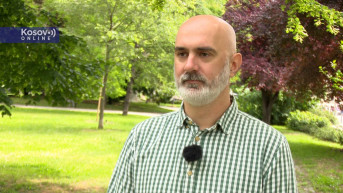
The ban on using Serbian flags at the city celebration in Leposavic is another piece of evidence that for Albin Kurti and a significant number of Albanians, it would be the best possible solution if there were no more Serbs in Kosovo, Petar Ristanovic, a research associate at the Institute for Serbian Culture in Leposavic, assesses for Kosovo Online.
"Serbian flags bother Albin Kurti and a significant number of Albanians, Kurti's voters, as well as Albanians from the broader Albanian community, and this is one in a series of proofs that a significant number of Albanians do not want the presence of Serbs, that Serbs' presence in Kosovo bothers them, and that the best possible solution for them would be if there were no more Serbs in Kosovo," he notes.
Ristanovic explains that there are more flags of other countries in Kosovo than Kosovo's own, but the only problem is with Serbian flags. He adds that there are numerous examples of discrimination against the Serbian community, violating the Kosovo constitution itself.
"As for flags specifically, anyone who has ever been in Kosovo knows that Kosovo is flooded with various flags. If we were to speak in absolute numbers, I am sure that the number of flags from America, Germany, England, and Albania is certainly tens of times more than the number of Kosovo flags on the territory of Kosovo. However, the only problem is with the Serbian flag, which is removed not only from public buildings but also from all public areas, and even individuals are deprived of it at certain celebrations and gatherings," our interviewee says.
He assesses that the international community does not react because it "generally follows a policy where its reactions boil down to lukewarm statements."
"No one in Pristina takes these statements seriously anymore. Simply put, for the international community, the only thing that matters is that the surface situation is calm, that there is no escalation, no mass violence, and as long as that's the case, the repression against Serbs that continues can persist," the historian warns.
Speaking about flag usage in Kosovo, he recalls the fact that during the existence of communist Yugoslavia, for a long period from 1948 to 1968, the use of the Albanian flag in Kosovo was effectively banned. He explains that there was no formal decision, but in practice, displaying the Albanian flag was not allowed because separatist groups advocating for the territory's secession from Yugoslavia, populated by Albanians, always began their activities by displaying Albanian flags.
"After '68, the use of the Albanian flag was allowed as a flag of the Albanian nationality, and the identical flag to Albania's flag was used, which at that time was hostile towards Yugoslavia. Such a situation lasted for a full twenty years. During the 1980s, the Constitutional Court challenged that practice and said that the flag used by Albanians must differ in some way from Albania's flag. It was suggested that it should differ in dimensions, but the Albanian leadership from Kosovo at that time did not allow it, and all demands to ban the use of Albania's flag were then characterized as anti-Albanian, as racist, as examples of repression, and they strongly opposed it," Ristanovic explains.
He notes that it was one of the primary social issues at that time, and now, about thirty years later, the situation is completely reversed.
"Even some of the same politicians who were active in the Albanian national movement back then now explicitly advocate for banning the use of the Serbian flag in Kosovo," Ristanovic says.


0 comments