
Ristanovic: The price we paid for the Kumanovo Agreement was too high
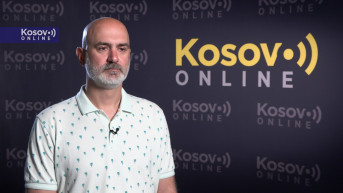
Research associate at the Institute for Serbian Culture in Leposavic, Dr. Petar Ristanovic, stated that the Military-Technical Agreement in Kumanovo ended the war in 1999, after which the Albanians gained everything, and the Serbs lost everything.
"The Serbs essentially did not gain anything; rather, they lost almost everything. From mid-June and over the next two months, a large number of Serbs were forced to flee Kosovo in an uncontrolled exodus to the territory of central Serbia. Those who remained in Serbian enclaves and larger Serbian communities that managed to protect themselves lived extremely difficult lives for the next two years. They live difficult lives even today. The next two months, the first two months during the summer, and then the next two to three years were a period when their lives were practically in danger every day," Ristanovic told Kosovo Online.
Unlike the Serbs, the Albanians, he explained, "more or less got what they expected."
"First in practice, and then with the declaration of independence. A large number of European and Western countries recognized the independence of Kosovo, which is disputed today and is a quasi-independence, but functions in that legal vacuum. Kosovo functions in such a way that it can be said the Albanians got most of what they demanded. However, the question arises whether the war, suffering, and destruction were worth it," Ristanovic emphasized.
He stressed that from this temporal distance, the key question for historians is whether the price paid was too high for what was obtained through the Kumanovo Agreement compared to what was previously offered during the negotiations in Rambouillet.
"My opinion is that the price was indeed too high, if we look at the differences between the agreement ultimately offered at Rambouillet and what was signed in Kumanovo and what followed later – Resolution 1244. The essential difference is that Rambouillet implied that a referendum would be organized after three years in which the Albanian majority would most certainly vote for Kosovo's independence. The Military-Technical Agreement in Kumanovo and later Resolution 1244 of the Security Council did not have such a provision," he stated.
He explained that the resolution guaranteed the integrity of Serbia.
"Essentially, it envisaged broad autonomy for Kosovo within Serbia. However, in practice, it was, I believe, expected, and later confirmed, that the Albanians would declare independence after a period, which is disputed today but is largely a reality on the ground," Ristanovic concluded.
He assessed that the primary task of the Military-Technical Agreement was to end the war which, according to him, neither ended in capitulation nor in victory for the then Federal Republic of Yugoslavia (FRY).
"I couldn't call it a complete capitulation. I believe it wasn't a capitulation, but it is definite that Yugoslavia lost the war. It was forced to withdraw its military and security forces. It lost the capacity to protect the Serbian population. Definitely, the war was lost, even though at that moment the Yugoslav leadership declared victory, which we all remember today. It was definitely not a victory, but it wasn't a complete capitulation either, though it was quite close to it," said Ristanovic.
He stated that NATO's victory was inevitable due to the enormous disparity in military forces and resources, and at that moment, the Albanians also won militarily.
"Of course, the Albanians and the KLA did not win; NATO forces, which fought against Yugoslavia, did," said Ristanovic.
Analyzing the Kumanovo Agreement, what has been implemented, and what remains only on paper, this historian said that the most important point was implemented – the withdrawal of police and military forces from the territory of Kosovo.
"Essentially, Serbia at that moment largely renounced its sovereignty over Kosovo and Metohija, at least in a practical sense. Unfortunately, what was intended for the other side was not implemented. The KLA was never fully disarmed. In fact, to a large extent, it was not disarmed at all. Its core later became part of today's quasi-military forces," Ristanovic assessed.
He recalled that the provision from the Military-Technical Agreement, which was later included in UN Security Council Resolution 1244, about the return of a limited number of police and military forces to Kosovo, was not implemented either.
"This was never implemented. Serbia requested this several times, but it was rejected since it required the consent of the international forces, namely NATO forces, which Serbia never received," the historian reminded.


comments