
Stevanovic: The contradictions of the Military-Technical Agreement from Kumanovo are identical today as they were 25 years ago
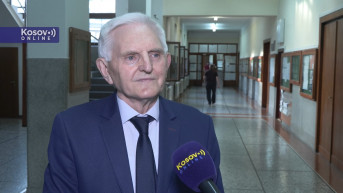
One of the signatories of the Kumanovo Agreement, retired police general Obrad Stevanovic, stated for Kosovo Online that the contradictions of the Military-Technical Agreement from Kumanovo are identical today as they were 25 years ago, and that the key problems are its misinterpretation and non-implementation.
"Even after a full quarter of a century since the conclusion of the Military-Technical Agreement in Kumanovo, the problems of that agreement, its contradictions, and some other issues related to it are almost identical to those from a decade ago. The key problems of the Military-Technical Agreement are its non-implementation by the international security forces in Kosovo and Metohija, and its misinterpretation and misunderstanding," said Stevanovic.
As a key point of misinterpretation, he cites the belief that the Kumanovo Agreement was signed with NATO.
"In fact, the Military-Technical Agreement was concluded with the international forces of the United Nations. Another fact that is often misinterpreted is the composition of the international security forces in Kosovo and Metohija, which also comprise the international security forces of the United Nations, not NATO forces. The third problem is the frequent distinction between the de jure and de facto situation in Kosovo and Metohija. The international security forces are de jure UN forces, but de facto they behave as NATO forces. I would remind you that a significant number of forces from countries that are not NATO members, such as Russia, Ukraine, Jordan, and some others, were part of these forces," Stevanovic stated.
He said that the greatest contribution of the Kumanovo Agreement was the cessation of the war, but it failed to meet the expectation of bringing freedom.
"Under the responsibility of the international forces in Kosovo and Metohija, as we know, around 250,000 people left. We remember that NATO stated its goal was to prevent a humanitarian catastrophe. A humanitarian catastrophe did not exist before the start of NATO aggression, and this is proven by simple facts. Before the aggression, about 50,000 people left Kosovo and Metohija sporadically, but with the beginning of the aggression, around 800,000 Albanians left Kosovo and Metohija," Stevanovic said.
Asked about the key reasons for the then leadership of the Federal Republic of Yugoslavia (FRY) to agree to negotiations and a peace agreement after 78 days of war, Stevanovic said there were numerous reasons, one of them being that the country had no allies at that moment.
"China and Russia were also powerless to provide any assistance to the Federal Republic of Yugoslavia. So, the reason to enter negotiations and conclude the agreement was obvious. All military resources of the FRY were being depleted without the possibility of replenishing them and without the possibility of purchasing such means from our friends. Russia had no way to, for example, provide us with combat aircraft, air defense systems, etc. It was clear that very difficult consequences were looming, which had already been hard to bear. It was simply evident that in the future, we might find ourselves in a situation where we simply have no means for defense," said Stevanovic.


comments