
Ristanovic: The restoration of Xhafer Deva's house – a message to Serbs that they are not welcome in Kosovo
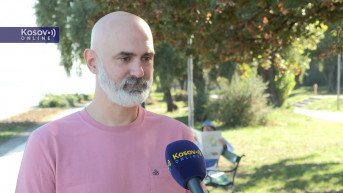
"By restoring the house of former Nazi collaborator Xhafer Deva, Albanians are sending a message to Serbs that they are not welcome in Kosovo," says Dr. Petar Ristanovic, a research associate at the Institute for Serbian Culture in Leposavic, in an interview with Kosovo Online. He points out that this move by Pristina is scandalous, given Deva's undeniable role in World War II and his involvement in the Holocaust.
Since the house was restored despite the opposition of the EU Office in Kosovo, Ristanovic believes that the European Union's objections were "purely formal."
"This story has a prehistory, as the house was supposed to be restored under that name using funds allocated by the EU for certain cultural projects. When it became known what part of these funds was intended for, and when people, primarily from the Serbian community, raised the alarm with Western embassies—especially the German Embassy, considering that Xhafer Deva was directly involved in the execution of Serbs and Jews in Kosovo, particularly in Mitrovica—those funds were withdrawn. A message was sent that this should not be done, given Xhafer Deva's undeniable Nazi past," Ristanovic explains.
However, Ristanovic adds that since the opposition came from the Serbian community, the Albanian side took it as a signal to further persist with the project, ultimately deciding to restore the house using their own funds and create a memorial for Xhafer Deva.
"This is scandalous in itself, given that Xhafer Deva's involvement in the Holocaust, as well as the persecution of Serbs, Roma, and Jews, is undeniable. He is not a controversial historical figure. His past and his role in World War II are fully illuminated and clear," Ristanovic emphasizes.
When asked whether this reflects Western negligence or an inability to stop Pristina, Ristanovic says it is a matter of indifference.
"They send a message that they oppose it, that it shouldn't be done, and in a way, they wash their hands of the whole situation. Kosovo is indeed a Western protectorate, but no one cares about these, so to speak, 'small matters.' They are small for someone from the West who is here to do their job in Pristina. On the other hand, for Serbs, this is extremely important. It matters for the entire atmosphere being created and existing in Kosovo. For Albanians, Xhafer Deva is a hero, and his past is considered unquestionable and pure. They refuse to acknowledge any other version of the truth, which sends a message to the Serbian community that what Deva did in the past is desirable. And what Deva worked toward was the removal of Serbs from Kosovo and Metohija," Ristanovic highlighted.
He added that Xhafer Deva was an advocate for, and actively worked towards, the creation of "Greater Albania."
"They refer to it as 'National Albania' and 'Historical Albania.' Essentially, it aims to encompass areas where Albanians live, including present-day parts of Montenegro, Serbia—specifically the Raska region—and Macedonia. Xhafer Deva was the Minister of Interior of Greater Albania, or more precisely, the part of Greater Albania that was under Italy’s patronage. Deva was directly responsible for the Holocaust, the execution of Serbs, and the formation of the SS Skanderbeg Division. These are easily verifiable facts. However, due to his nationalist efforts, he is now perceived as a national hero among Albanians. They are completely uninterested in the other part of his biography—his involvement in war crimes. There is a focus on his work as a nationalist, and today he is celebrated in Kosovo. Schools and streets bear his name, and now he has his own memorial," explained Ristanovic.
Ristanovic concluded that the restoration of Xhafer Deva's house sends a message to Serbs, a message that has been frequent in recent months and years—that they are essentially not welcome in Kosovo.


0 comments