
Sadiku: Mitrovica pays the price of being a divided city
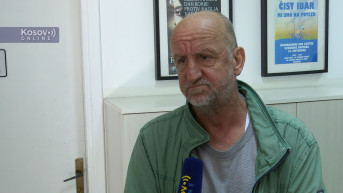
Former Deputy Speaker of the Municipal Assembly of North Mitrovica, Skender Sadiku, assessed—following the signing of the Administrative Instruction for the Mitrovica Committee by Kosovo’s Minister of Local Government Administration Elbert Krasniqi—that it is positive for the Committee to exist, but that Mitrovica continues to pay the price of being a divided city, and that the residents of the two municipalities are united primarily by shared problems.
Sadiku noted that it was a shortcoming that the instruction did not precede the establishment of the Committee, adding that there are numerous factors linking the north and south of Mitrovica.
“Mitrovica pays the price of being a divided city. There are countless things that connect communities—Serbs, Albanians, and all residents—such as water resources, rivers, and many issues that require joint work. Speaking now as a citizen, I have not seen significant progress on the ground, but I hope that now, with changes in the authorities, and given that this Committee was formed during an election period, both its composition and its work will improve. There are many things that divide us, but also many that bind both parts of the city,” Sadiku said.
He emphasized that the Committee should also address the needs of other communities living in the municipalities.
“In the south there are no Serbs, while in the north there are Albanians who cannot return to their property. Even the minister himself does not come from either the Albanian or Serbian community. He should take into account other communities, especially in North Mitrovica, which is truly a multiethnic city—home to Bosniaks, Roma, Ashkali, Egyptians, and Turks. The Committee should consider all these communities,” Sadiku stated.
Sadiku stressed that Mitrovica needs development.
“This city needs joint projects in culture, sports, and other areas that should be supported by the government. Municipal budgets—both in North and South Mitrovica—are limited, as I know from experience. Funding must come from central authorities. Minister Krasniqi should not merely issue documents for the Committee but should bring concrete initiatives and, if I may say humorously, substantial funding so that results become visible on the ground,” he said.
He also highlighted ongoing infrastructure problems.
“There is no public transport, roads are in poor condition, and even today there are 70 burned houses in Brdjani. The return process is not dignified, and there is still a school operating in containers. There are numerous issues that both North and South Mitrovica, as well as the central authorities, must address,” he noted.
Sadiku emphasized that, unfortunately, the north and south are united only by their problems and recalled that, under the Ahtisaari Plan, two municipalities exist, making formal unification impossible.
“It is not about the city or infrastructure—it is about bringing people together. If the goal is genuine integration, a different approach is needed. Through regulations, you can further divide people or make their lives more difficult. The focus must be on people on the ground,” he added.
He warned that current measures tend to deepen division rather than foster rapprochement.
“People should feel that the city belongs to all of them, that it is not divided—that is natural. However, in reality, it remains divided. These regulations and measures seem to move us further apart rather than closer together. The problem is that dividing a city is easier than uniting it. Uniting it is an extremely difficult task,” Sadiku concluded.
According to Minister Elbert Krasniqi, the Administrative Instruction on the Mitrovica Committee is intended to regulate the “organization and functioning of the Mitrovica Committee,” which will continue to play an important role in cooperation between the two municipalities and in implementing joint projects aimed at improving the quality of life for citizens.

0 comments