
Savkovic: Rutte’s visit is situation assessment and confirmation of NATO’s commitment to regional stability
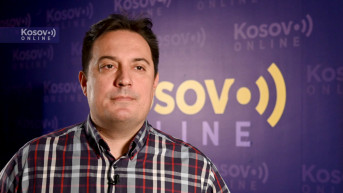
Senior advisor at the ISAC Fund, Marko Savkovic, tells Kosovo Online that NATO Secretary General Mark Rutte, who is set to visit Kosovo tomorrow, will likely aim to convey a message of continuity, that is, reaffirming NATO’s interest in the region and its commitment to stability at a highly delicate geopolitical moment, particularly as discussions arise about the possibility of the United States gradually withdrawing from Europe.
"This certainly has implications for NATO’s mission in Kosovo, which is the longest-running NATO mission when compared to others. His visit follows immediately after his trip to Bosnia and Herzegovina, as part of a regional tour, and it is no coincidence that Rutte chose our region to confirm NATO’s continued dedication to its stability. However, I do not expect his messages to differ significantly from those of his predecessor," Savkovic stated.
He sees tomorrow’s visit as an opportunity for NATO to assess the situation on the ground and determine the real state of affairs. Despite the fact that elections in Kosovo passed without major incidents, he emphasized that the country is not entirely stable and that NATO remains concerned about its security.
"It is quite possible that they planned the visit to take place after the elections, which is only natural. They may have even expected the situation to be clearer by now, though that is less relevant at this point, as Kosovo has not fully emerged from its political crisis. There might even be new elections. However, this does not significantly affect KFOR’s core mission. What matters to them is to reaffirm their presence, regardless of the ongoing geopolitical shifts, and to emphasize their commitment to supporting all communities living in Kosovo," Savkovic explained.
As he added, research indicates that the Serbian community has generally trusted KFOR and maintains a relationship of confidence with them.
"That trust may have been somewhat eroded in recent years, particularly when there was an expectation that KFOR would step in to protect the Serbian community from the rather aggressive actions of institutions in Pristina. That did not happen, as NATO chose to position itself neutrally," he noted.
Savkovic emphasizes that NATO, at its core, is a collective decision-making body that operates conservatively, which, despite its predictability, also makes it a reliable partner.

0 comments