
Sejdiu: The outcome of elections in Hungary could also affect Kosovo
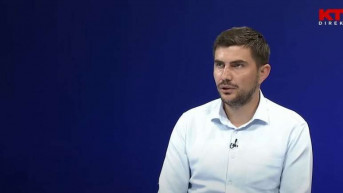
Mehdi Sejdiu, a doctoral candidate at Heidelberg University, stated that the outcome of the electoral race in Hungary could also have an impact on Kosovo. He assessed that opposition candidate Péter Magyar, if victorious, would not follow the policies of the current Prime Minister Viktor Orbán, which have included support for Serbia and obstacles for Kosovo, as reported by Koha.
Sejdiu recalled that Hungary exerts influence in Kosovo through control of part of the airspace within KFOR, by contributing the third-largest number of troops, and through increasingly strong ties with Serbia in recent years.
He expressed confidence that Orbán’s opponent, Péter Magyar, would not pursue the policy Hungary has followed in recent years under the current prime minister, which included advocating for Serbia’s accelerated accession to the European Union while placing obstacles in Kosovo’s integration process.
“Hungary has acted within the European Council as a kind of shield for Serbia. It has also somewhat toyed with Kosovo’s citizens,” Sejdiu said, adding that such a situation would not have occurred had Magyar been in power.
He noted that the closer relations between Hungary and Serbia in recent years are largely the result of strengthening trade ties, Koha reported.
Sejdiu believes that Kosovo should bear in mind that countries like Hungary—not only major powers—can also influence its trajectory.
“Hungary’s influence on Kosovo was also evident in the context of EU measures. It was often not in favor of lifting those measures, or it echoed Serbia’s positions that something else must first be achieved before the measures are lifted. This had a negative impact. Also, in the Council of Europe, it was the only NATO and EU member state to vote against accession, at a time when even Greece did not vote against. This raises questions about what role it will play in the future if relations do not improve. It is not the United States or Germany, but there is a possibility that mid-sized countries could disrupt alliances such as NATO and the EU to influence outcomes that are less favorable for Kosovo,” Sejdiu explained.
He also recalled that Hungary recognized Kosovo due to the pro-Western government in power at the time.
He does not expect Budapest to withdraw its recognition but emphasizes that obstacles in Kosovo’s Euro-Atlantic integration path may arise if Hungary does not change its approach.
For this reason, according to him, Pristina should work on making the case that Kosovo’s stability is undermined if Serbian positions are supported at the international level.
He added that Kosovo should develop better trade relations with Hungary, as well as a strategic approach toward countries governed by far-right parties.
“Kosovo faces a significant challenge with parties belonging to the far right or that political spectrum. Unfortunately, there is insufficient discussion in Kosovo about the impact this has on domestic politics. Even visa liberalization was not achieved earlier due to the far right in France. The fact that Italy’s role in the Council of Europe was influenced by the right-wing government of Giorgia Meloni is also indicative. Policies that can directly affect the domestic scene come from this family of far-right political parties in Europe. Kosovo cannot choose the governments of other countries—we must cooperate with whoever is in power and have a strategy for dealing with these far-right governments, because tomorrow or the day after, France could have such a government as well,” Sejdiu concluded.



0 comments