
Serbia has obtained the 10th Kosovo recognition withdrawal
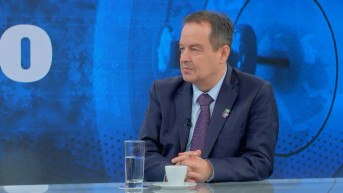
The list of countries that have withdrawn recognition of Kosovo is getting longer, and in the Serbia's "drawer" there is yet another country that has withdrawn Kosovo's independence recognition. It is the 10th country that has decided to change its decision, which is on the list that Serbia has not yet published, Serbian Foreign Affairs Minister Ivica Dacic confirmed for the Novosti.
Dacic announced that Serbia would intensify diplomatic action regarding the Kosovo recognition withdrawals.
It is also Belgrade's response to Pristina's moves, which violates all agreements, especially the Washington document, which states that it will not submit a request for admission to international organizations.
Instead of "freezing" those initiatives, Kosovo Prime Minister Albin Kurti and members of his cabinet have been traveling around the world in recent months, trying to get membership cards that do not belong to them according to any criteria, Novosti states.
The culmination was the application for admission to the European Union, which will be a kind of test for the members of the "27 Club" – Spain has already spoken out on this issue, stating that it would not support the application, according to the newspaper.
All attempts to gain a place in one of the European and world organizations do not obscure the main goal of Pristina - a chair in the UN, which they constantly aim for, Novosti points out, adding that it is even mentioned in the Franco-German dialogue plan between Belgrade and Pristina, which Serbia refused.
Despite the support given to the Albanians by the Western powers, a seat in the UN is too much, by all accounts, especially because of the diplomatic offensive carried out by Belgrade. Even if by any chance the UN General Assembly decides to vote on the Kosovo admission now, the numbers are on the side of Serbia.
The current balance shows that out of a total of 193 UN members, 105 do not recognize Kosovo, and 88 do (of which five countries, despite the recognition, do not vote in Pristina's favor when it comes to applications for membership in organizations) and for someone to enter the UN, a two-thirds majority is required since voting is based on the principle of one country - one vote, so world powers and small countries have the same power on the East River.
When asked why the names of those who decided to withdraw recognition have not yet been published, Dacic said that Serbia respected the position of those countries and did not want to expose them to any pressure from Pristina, especially from its allies.
"We have to be careful. Secondly, with the Washington Agreement, we undertook the obligation to stop the recognition initiative, and we wanted to show that we stuck to what we signed. However, Pristina doesn't do that. The difference in the attitude towards the assumed obligations is essential, and everyone who mediates knows very well who is a serious partner and who is a liar," he said.
Novosti indicates that among the countries whose names are kept secret, there are African countries, the countries of the Caribbean region, and the Pacific Ocean.
Among them, some countries are influential in their regions and can cause a domino effect of new Kosovo recognition withdrawals.
By the time the Washington Agreement was signed in September 2020, 18 countries had changed their original decision on the Kosovo status.
Since May of last year, when Pristina submitted an application for the Council of Europe membership, ten more countries have sent notes to Belgrade about their recognition withdrawal.
That means that in the last few years, as many as 28 countries have changed their position on Kosovo, Novosti emphasizes, adding that there would be more.
The list of 18 countries that withdrew recognition of Kosovo independence before the signing of the Washington Agreement includes Sierra Leone, Suriname, Togo, Ghana, Nauru, the Union of Comoros, Sao Tome and Principe, Guinea-Bissau, Burundi, Liberia, Lesotho, Grenada, Madagascar, the Commonwealth of Dominica, Papua New Guinea, Solomon Islands, Palau, and the Central African Republic.


comments