
Serbian Ministry of Culture Calls for UNESCO’s Urgent Response over Works near Visoki Decani
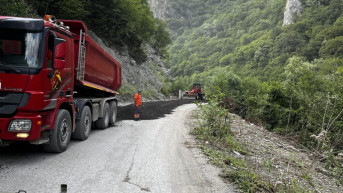
The Serbian Ministry of Culture has strongly condemned the resumption of works within the legally designated Special Protective Zone of the Visoki Decani Monastery without the consent of the Serbian Orthodox Church (SOC), describing it as “a ruthless attempt to erase irrefutable evidence of centuries-old Serbian statehood on this land” and thereby falsify history. The Ministry called on international organisations, particularly UNESCO, to react urgently.
“The Ministry of Culture condemns the renewed continuation of unlawful works within the established Special Protective Zone of the Visoki Dečani Monastery, as part of the long-disputed project to construct the Decani–Plav international transit road. This unacceptable act by Pristina confirms that the monastery, which is both inscribed on UNESCO’s World Heritage List and has remained on UNESCO’s List of World Heritage in Danger for exactly 20 years, continues to be one of the most endangered cultural heritage sites in Europe,” the Ministry said in a statement.
The Ministry particularly condemned the fact that neither the Visoki Decani Monastery nor the Diocese of Raska-Prizren had been consulted or informed about the works.
“The fact that one of the greatest Serbian holy sites enjoys international protection clearly does not deter Pristina from attacking this cultural monument. On the contrary, it appears to encourage barbaric and anti-civilisational behaviour. What is unfolding is a ruthless attempt to erase and falsify history, as well as the Serbian people themselves, by removing irrefutable evidence of centuries-old Serbian statehood on this land,” the statement said.
The Ministry further expressed concern that the actions targeting the Visoki Decani Monastery are taking place as part of what it described as “an evidently orchestrated campaign of hatred, extremism, persecution and the eradication of everything bearing the Serbian name, precisely in the cradle of Serbian identity, in Kosovo and Metohija, orchestrated by the Kurti regime.”
The statement also argued that the construction machinery threatening the Visoki Decani Monastery stands “in the same ranks as Kurti’s special police units,” which, according to the Ministry, are carrying out arbitrary mass arrests and persecution of Serbs, banning national symbols that threaten no one, and imposing what it described as bizarre restrictions and lists of prohibited songs, citing the recent case involving actor Milan Vasic, which it said was characteristic of totalitarian repression.
The Ministry warned that attacks on cultural heritage sites, as part of what it described as a broader climate of insecurity and fear, are particularly alarming because they are never merely expressions of hatred toward the identity of one people, but also signal an escalation of violence.
“The Ministry of Culture therefore calls upon international organisations, particularly UNESCO, within the scope of its mandate, to respond urgently in accordance with international conventions, especially the Convention concerning the Protection of the World Cultural and Natural Heritage, founded on universal principles,” the statement concluded.
Earlier today, the Diocese of Raska-Prizren announced that road works had resumed within the legally established Special Protective Zone of the Visoki Dečani Monastery without the consent of the monastery, the Diocese, or the Serbian Orthodox Church.
Following the Diocese’s statement and media reports, Kosovo Deputy Ombudsperson Srdjan Sentic launched an ex officio investigation into the matter.



0 comments