
Sljuka: The formation of the CSM is an extremely unpopular issue among all Albanian parties
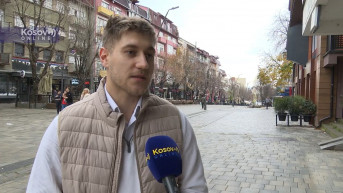
Associate of the NGO New Social Initiative Aleksandar Sljuka believes that a government formed by parties that are currently in the opposition would have a different approach to the formation of the Community of Serb Municipalities, since those parties have expressed readiness to cooperate with international actors who demand the formation of the CSM, but he points out that this issue is extremely unpopular among all Albanian parties in Kosovo.
Sljuka tells Kosovo Online that the question is how much support opposition parties would have from the international community, if they come to power, to implement the CSM, given that this topic has been demonized in the public sphere and that strong polarization was created around it during the government of Albin Kurti.
“The international community declaratively demands that both sides fulfill their obligations, but we do not see it engaging more significantly in terms of exerting pressure on the parties. In addition, we see that other issues in the world have now drawn the attention of the international community, such as the situation in Ukraine or in Gaza,” Sljuka notes.
He also sees a possible problem in the fact that a new government, if formed by opposition parties, would have to be a coalition government, raising the question of how stable it would be.
“If it begins to fulfill something so unpopular, it could lead to its downfall. The formation of the CSM is a process that will certainly take time. They might be able to send a draft statute for review, but for the full formation of the CSM, a longer period will be needed, perhaps a year or two, and then the question is whether that government will be stable and long-lasting enough to deliver something like that,” our interlocutor points out.
In the event of a change of government at the central level, he says that a drastic change in the approach toward the Serb community in general should not be expected, but he believes it would be better than during the rule of Self-Determination.
“I would not say that they are particularly eager to implement measures that would improve the status of the Serb community, but they do want better cooperation with international partners. Their support is important to them, and they would therefore probably be more willing to implement even those unpopular decisions and take a step forward in the normalization of relations or de-escalation, with support, a green light, and perhaps certain guarantees from the international community. Essentially, they have no direct political interest in such moves because they could cost them political points,” Sljuka says.
As he emphasizes, the situation is so polarized that any decision that would constitute a concession to the Serbs would be scrutinized by the opposition, especially if the opposition were to be Self-Determination, that is, Albin Kurti.



0 comments