
Sljuka: By going to Brussels, Kurti wants to show his constructiveness so that the sanctions against Kosovo will be lifted
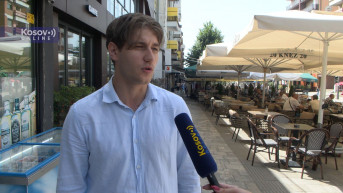
Aleksandar Sljuka from the NGO "New Social Initiative" says for Kosovo Online that the upcoming round of high-level dialogue in Brussels is happening in light of the announced lifting of EU sanctions on Kosovo and that the agreement of Kosovo's Prime Minister Albin Kurti to travel to Brussels can be interpreted as an attempt to demonstrate his constructiveness and willingness to engage in dialogue.
Sljuka recalls reports from certain media outlets suggesting that some countries, particularly those that do not recognize Kosovo, as well as Italy and France, have certain reservations regarding lifting sanctions on Kosovo and are more in favor of a gradual easing of measures.
"Kurti's agreement to this meeting can be interpreted in that direction – that he wants to show an act of goodwill, that he is constructive, willing to talk, and possibly strengthen the resolve of those member states that are hesitant about lifting the measures," Sljuka emphasizes.
He reminds that the spokesperson of the Kosovo government said one of the main topics would be the implementation of last year's agreement, which, as he says, is expected given that this is the first high-level meeting since September 14 of last year, and that the topic then was also the implementation of the Ohrid Agreement.
In his opinion, the focus on "grandiose issues" should not overshadow the smaller issues, which are actually the cause of the crises in recent years.
"The issue of the dinar is still unresolved, we had seven meetings and did not come to a solution. I think these matters should also be discussed; I would not want them to be neglected. We have seen that discussions on grandiose issues and the last option of the agreement did not resolve these minor disagreements and did not prevent unilateral actions by the Kosovo government that triggered escalation on the ground," he asserts.
Numerous problems faced by the Serbian community, as he assesses, will remain unresolved even after tomorrow's meeting.
"Perhaps there will be talks on how to persuade Kosovo to take some steps towards forming the Community of Serb Municipalities, but many issues troubling primarily the Serbian community in Kosovo will remain unaddressed. We have a ban on the import of Serbian goods that has been in effect for a year. We have a problem with the issue of the dinar. People cannot withdraw money here. We have the presence of special police and all these police bases built recently, as well as expropriation. Many problems will still remain unresolved after the meeting on June 26. I would not be overly optimistic, but, of course, it is good that such a high-level meeting is finally being held, if for nothing else, to at least hope for some progress," Sljuka concludes.

0 comments