
Spahiu: The purpose of the Congressmen’s visit was to pressure Serbia’s political leadership over the rights of Albanians
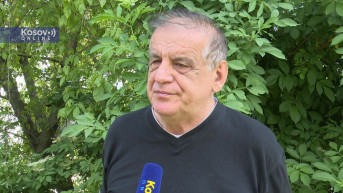
Political analyst Nexhmedin Spahiu says that one of the objectives of the recent visit by two U.S. congressmen, Keith Self and Suhas Subramanyam, who also visited Presevo, was to exert pressure on Serbia’s political leadership.
Spahiu believes that the position of Albanians in Bujanovac, Medvedja, and Presevo is unsatisfactory.
“I have visited the ‘Presevo Valley’ on several occasions, and their rights cannot be compared to the rights enjoyed by minorities in Kosovo. Nevertheless, they have largely been neglected. Furthermore, the deletion of residential addresses can be viewed as a form of pressure aimed at preventing them from returning to their homes. This is not something that has been invented; it is a real problem. Through the Albanian lobby in the United States, a visit by two congressmen—one Republican and one Democrat—was organized so that they could see the situation in the ‘Presevo Valley’ firsthand,” Spahiu said.
Spahiu also believes that comparisons with Kosovo are not entirely appropriate at the political level.
“I believe that everyone should focus on their own environment. It is important for Kosovo to respect the rights of its minority communities and to maintain a fair relationship with them, because that is in the interest of Kosovar society as a whole. The fact that Albanians do not enjoy sufficient rights in the ‘Presevo Valley’ is Serbia’s problem. This should concern the Serbian state, because as long as its citizens are dissatisfied, society as a whole cannot be satisfied,” Spahiu believes.
Asked whether the congressmen’s visit could bring about more substantial changes and what its purpose was, our interlocutor said that its aim was to place pressure on Serbia’s political leadership.
“There is a need for more investment and more rights for the citizens living in the ‘Presevo Valley.’ For example, they do not have the right to display the flag of their community. Admittedly, they also bear part of the responsibility, because Serbian legislation stipulates that the flag of a national minority cannot be completely identical to the flag of another state. While other communities have made certain modifications to their symbols, they have not wanted to do so, so it can be said that they share part of the responsibility in this regard. However, they should not face difficulties over whether they use a blue-and-yellow or a red-and-black flag. Kosovo is closer to them than Albania, and they are much more closely connected to Kosovo than to Albania. The last time I was there, I noticed that they were displaying the Albanian flag rather than the Kosovo flag,” Spahiu said.



comments