
Spahiu: Rohde is wrong about the new bridges on the Ibar, they will make life easier for citizens
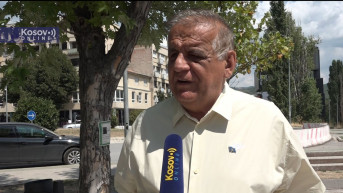
University professor Nexhmedin Spahiu stated that the German ambassador to Kosovo, Jorn Rohde, is entirely correct about the reasons for the institutional crisis in Kosovo, but that he is mistaken regarding the construction of two new bridges over the Ibar, as they will make life easier for the residents of South and North Mitrovica.
In several separate statements, Rohde first criticized the institutional crisis in Kosovo, assessing that it is “perhaps time to change the team,” alluding to the formation of a new government.
He also said that building two new bridges on the Ibar before elections was an “escalatory step,” adding that it would have been better to address traffic problems at the entrance to Vucitrn.
Spahiu, however, argues that the German ambassador is wrong to criticize the construction of the two new bridges on the Ibar.
“Building bridges in Mitrovica is more than necessary because of overpopulation and construction carried out without any urban planning. Traffic in Mitrovica is truly chaotic, and the bridges ease that flow, making them more than necessary,” Spahiu believes.
He added that Ambassador Rohde also made a valid point about the half-kilometer stretch of road at the entrance to Vucitrn that connects South and North Mitrovica with Pristina.
“It is truly absurd that even after five years of Kurti’s government that road still hasn’t been fixed, causing misery for so many people traveling from Mitrovica to Pristina. In that sense, he is absolutely right,” Spahiu clarified.
However, this analyst added that while Rohde’s criticism regarding the institutional crisis is justified, neither Albin Kurti nor the opposition is to blame, but rather the Constitutional Court of Kosovo.
“I think it is madness that the same candidate is put forward 50 times, but I don’t think either Albin Kurti or the opposition is to blame for that – it is the Constitutional Court,” Spahiu said.
He recalled the 2014 Constitutional Court decision which ruled that only the party with the most seats has the right to propose the speaker of parliament, and that parliament must vote on that proposal.
He described this decision as absurd.
“If that position belongs to the strongest party, then there is no need for a vote; by the very fact that they won the most MPs, they appoint the speaker. But if there has to be a vote, then the speaker will be whoever receives the most votes. That doesn’t necessarily mean it must be someone from the largest party, it could be from any party, as long as they get the majority of votes. I think Ambassador Rohde is right when it comes to the repeated voting for the election of the parliamentary speaker,” Spahiu clarified.



0 comments