
Spain and Romania do not change their attitude towards Kosovo
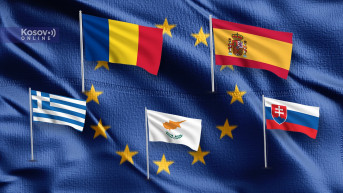
Spain and Romania, two of the five EU countries that do not recognize Kosovo's independence, still do not send a signal that they have changed their position on the issue, RTK writes.
More than two years have passed without new recognition of Kosovo, and the last country to recognize it was Israel, within the Washington Agreement. After the talks in Ohrid, it was said that the agreement would pave the way for recognition by the five countries of the European Union that had not done so yet, however, it seems that those countries have not changed their position.
RTK asked Spain and Romania about their positions on the recognition of Kosovo, after the agreement between Serbia and Kosovo in Ohrid, but neither country had given signals that they had moved from their previous positions.
Both countries say they support the dialogue and the reached agreement but do not give "positive signals" for recognition.
"Spain stands by its position that it does not recognize the unilateral declaration of independence, which Pristina adopted in 2008, and strongly supports a mutually acceptable solution through dialogue mediated by the EU," the official response of the Spanish Ministry of Foreign Affairs reads.
Romania's response is similar.
"The Ministry of Foreign Affairs of Romania appreciates the results achieved in Ohrid on March 18 between Belgrade and Pristina, within the dialogue led by the EU, which it strongly supports," the official response of the Ministry of Foreign Affairs of Romania reads.
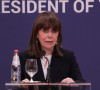
RTK reminds that Greece, another member of the EU that does not recognize Kosovo, still has the same position, and that the president of that country recently said in Belgrade that Greece did not intend to recognize Kosovo.
The head of Kosovo's diplomacy sees the five EU countries that do not recognize Kosovo as an obstacle to Pristina's integration aspirations.
"We are working hard, with our partners, so that the five European countries, which are a serious obstacle, start the process of recognition. It is not that there is no progress, which will be seen in the future," the Minister of Foreign Affairs and Diaspora of Kosovo, Donika Gervalla says.
International relations expert Dritero Arifi believes that the EU, as the guarantor of the agreement between Kosovo and Serbia, should influence the five EU countries that do not recognize Kosovo.
"The burden falls on the European Union because in this sense the EU would show its authority and power in the Western Balkans region, because, in contrast, five EU countries lead Russian policy in the Balkans, as well as Serbia itself," Arifi says.
Kosovo's main ally on the diplomatic front, the US, also promised help in securing new recognitions, and US Secretary of State Antony Blinken said that after the Ohrid Agreement, he expected Slovakia, Romania, Cyprus, Greece, and Spain to change their position in relation to Kosovo's independence, RTK reminds.


0 comments