
Sretenovic: Possible Coalition Around Macron, No Major Changes in Relations with Serbia and Kosovo
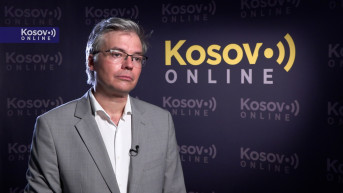
Expert in the history of international relations, historian Stanislav Sretenovic, says that the election results in France are not a surprise and that President Emmanuel Macron's party could form a left-right coalition that would hold a majority in parliament. In foreign policy, this historian emphasizes that Serbia will not be a priority, nor will the dialogue between Belgrade and Pristina, but it is possible that official Paris will soften its demands for de facto recognition of Kosovo.
"France certainly contributes to the dialogue, contributing to the search for a solution that will be acceptable to all parties. It is somewhat softer in its approach compared to Germany, as we have seen in the blocking of Kosovo in the Council of Europe. However, the fundamental issue of pressure on Serbia to recognize the self-proclaimed independence of its southern province will not change. The French will remain firm on that demand, but it is possible that the focus will primarily be on concrete solutions on the ground, for the benefit of all citizens, both Serbs and Albanians. That very unpleasant demand, which is against Serbian interests and which Serbia cannot accept, might be pushed into the background," Sretenovic said for Kosovo Online.
He emphasizes that the election results are a kind of axiom of French domestic politics.
"This was one of the two possibilities after the first round of the French elections when the National Rally came in first. It has been proven that the axiom of French domestic politics, both in presidential and parliamentary elections, always functions, which is when the National Rally is in the lead, the second or third party or a group of parties, or the whole of France, unites to prevent them from winning. This worked this time as well," Sretenovic said.
According to him, France now has a parliament without an absolute majority, with three clearly defined blocs, making it complicated to form a new government unless there is a regrouping of political parties.
"In this situation, I see that Macron's group, which won about 160 seats, could still form a coalition that would include both the moderate left and the moderate right. These elections have shown the great coalition potential of the classic 'Gaullist party'—the Republicans, who won 65 seats. If the left-wing coalition, which includes extreme leftists like Mélenchon's supporters and communists, breaks up, and if the socialists and ecologists separate, they might form a centrist, moderately left-right coalition with Macron's center and the Republicans, possibly achieving an absolute majority of 289 out of 577," Sretenovic emphasized.
In that case, this expert points out, there will be no change in foreign policy.
"Serbia is not a main topic in French foreign policy. To get to Serbia, a lot of other important issues for France have to be addressed first. The basic topics of foreign policy since 1945 and earlier, during the 19th century, are relations with Germany. This is a constant in French foreign policy. Priorities also include Atlantic alliances, primarily with the USA. The third level is the stance towards the war in Ukraine and France's overall position on other critical points in the world: Africa, Indochina... In any case, the southeast of Europe will be the last issue the French will deal with," Sretenovic said.
He recalls that the economic and cultural relations between Serbia and France have been on an upward trajectory since July 15, 2019.
"Since Mr. Macron's visit to Serbia and his speech in Serbian, it symbolized a rekindling of the long-standing and well-founded friendship between France and Serbia, forged during World War I and through the education of the Serbian administrative and technical elite at French universities. France has invested around 1.3 billion euros in Serbia, with a trend of growth. France employs around 11,000 workers in Serbia, and this trend is also on the rise," Sretenovic said.



0 comments