
Stanojevic: Kosovo Polje was burning, and my soul was burning too
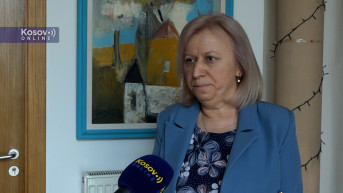
For Dragana Stanojevic, who was in Kosovo Polje on March 17, 2004, with her three daughters aged two, eight, and twelve, memories of that date will never fade, and the smoke from the fires and fear, she claims, she still feels today.
Stanojevic claims she would like to forget the date and day of the pogrom because it is associated with very painful memories, but she is aware, she says, that it must not be forgotten.
"Kosovo Polje was burning, the houses of our neighbors were burning, and my soul was burning. My soul was burning because of the feeling of helplessness, because of the realization that, unfortunately, there was no justice or righteousness," Stanojevic emphasizes for Kosovo Online.
She was alone in the apartment with her three daughters that day.
"I still feel the smoke from the fires and the smell of charred remains, every March 17th and every day. It has been twenty years since that day, and the memories are, unfortunately, still equally vivid. During these days, when we mark that date, I often hear the words 'pogrom' and 'persecution,' but in my mind are the words of my daughters, 'Mom, our school is on fire, where will we go to school now?' and 'Dad, where are you now to see us, they will kill us here.' Namely, my girls lost their father three months before that event, and I lost my husband. A father is still someone they rely on more as a protector than a mother," Stanojevic recounts.
All eyes were on international representatives responsible for security in Kosovo that day, Stanojevic explains, but, as she emphasizes, it was their biggest disappointment.
"A glimmer of hope was the arrival of an armored vehicle from KFOR, but it was also the biggest disappointment because they asked us to leave our apartments in five minutes and accompany them to Ugljare, but they didn't tell us what would happen next. We didn't leave; we spent a sleepless night, a night filled with gunshots, the collapse of roofs, and the cheers of our Albanian neighbors when a house fell, collapsed, and burned. I covered the heads of my children so they wouldn't hear it; the older two were crying, and the youngest was crying because of them. I will never forget that," Stanojevic emphasizes.
The next day, it was decided that women and children would leave the building.
"We stayed at my parents' for a week and then returned to Kosovo Polje, staying there until 2007 when, unfortunately, we had to leave Kosovo Polje because we were tenants, and the landlord sold the apartment. That was another traumatic day for me and my children because we had to leave the place where I was happiest and spent the most beautiful part of my youth, and for them, the place where they were born," Stanojevic says.
She claims she would like such days never to be repeated anywhere, by anyone, and at any time.
"Often I hear from my colleagues saying it was just an ordinary day, but for us Serbs from Kosovo and Metohija, there is no ordinary day anymore, since 1999, maybe even before that. That's how I remember that March 17th, and I wish it never happens anywhere, to anyone, ever again," she emphasizes.
Although they now live in Gracanica, Dragan's eldest daughter has become a teacher in the school she once cried for while it was burning, and that, Stanojevic points out, gives them hope for remaining and surviving.




comments