
Starovic: The arrest of Banjac is Kurti's message to the Serbs not to return to Kosovo
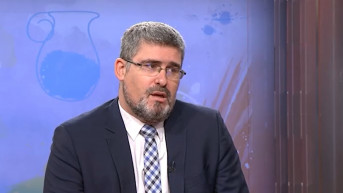
State Secretary in the Ministry of Defense of Serbia, Nemanja Starovic, told RTS that the arrest of Branko Banjac in Jarinje was a clear message from Albin Kurti to the Serbs not to return to Kosovo.
Commenting on the latest arrest in Jarinje of pensioner Branko Banjac by the Kosovo police, Starovic said that that was another incident in a series aimed at intimidating the Serbs.
He states that the 72-year-old Banjac went with his wife to Kosovo, where a hearing was supposed to be held in the procedure for the attempt to return forcibly confiscated property, his wife's house in the center of Pec.
"Only after the intervention at the highest political level, the intervention of Petar Petkovic towards Miroslav Lajcak, Mr. Banjac was released. We see what Albin Kurti's intention is - to send a clear message to the Serbs who were expelled from the area of Kosovo and Metohija not to return, not even to come to visit, without accidentally initiating procedures for the return of their property," Starovic emphasizes.
He is worried that despite the fact that there is a dialogue on the one hand, the Western countries of the Quint, as he says, do not emit some kind of great enthusiasm for the acceleration of that political process.
On the other hand, Starovic warns that we have constant, daily unilateral moves by the regime of Albin Kurti, which drastically disrupts both the political and security climate.
"I think there are no normal channels of communication, that's why we need normalization. It's good that Banjac was released, he returned home, but we can't say that it's normal, because of such incidents; the problem must be raised to the highest political level. It is not sustainable," the State Secretary states.
NATO exercises are a violation of Resolution 1244
As for the NATO exercise in Kosovo, Starovic states that it is a similar exercise that was held two years ago. It is an exercise under the auspices of the US, which it is conducting with its bilateral partners.
"What we are pointing out is that the holding of such a military exercise is absolutely contrary to the still valid Resolution 1244 of the UN Security Council since it stipulates that the only legal forces in Kosovo are the forces of the KFOR mission," Starovic says.
He adds that no one asked Serbia for consent for that exercise.
"On the other hand, a big problem is the participation of members of the Kosovo Security Forces, who in this way somehow legitimize themselves and are presented and accepted as a military force. They are not and cannot be according to the provisions of Resolution 1244, even according to the current Constitution of Kosovo," Starovic points out.
Starovic adds that holding this exercise does not represent a security threat to Serbia, but it is a problem from a political point of view.
"What remains for us is to, first of all, oppose it on the political level and monitor what is happening on the ground. By preserving peace and stability in the region, we guarantee at almost any cost that the security of the Serbs in Kosovo and Metohija cannot and must not be threatened," the State Secretary said.
The obligation of Pristina to form the CSM
Starovic says he fears that the integrity of the entire negotiation process has been called into question again. He states that if we look at the Ohrid Agreement, now for the first time the map of the negotiation approach has been brought to the table, and that it must be an integral part of the implementation of the framework of the political agreement.
"The principle is the following, that both sides implement their obligations, step by step. In doing so, everyone agreed, including the international representatives, that the first step must be taken by the Pristina side. It is about the formation of the Community of Serb-majority Municipalities. We see that on that first step, Pristina violates all the principles that have been established somewhere," Starovic says.
He also adds that Pristina not only is not punished, but is rewarded, whether it is visa liberalization or the beginning of the process of admission to the Council of Europe.
"I am afraid that the whole process will fall on that step. All of this speaks of an unequal relationship between the two parties involved in this process. This is nothing new and we have been exposed to it for many years," Starovic concluded.

0 comments