
Starovic: Dialogue remains an empty shell as long as Kurti heads institutions in Pristina
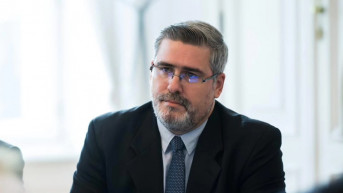
Dialogue remains an empty shell as long as Albin Kurti heads the Kosovo government and continues to implement a pattern of unilateral actions, Serbia's Minister for European Integration Nemanja Starovic said. He emphasized that it is very difficult to speak of dialogue, even in a formal sense, until Igor Popovic, the Assistant Director of the Office for Kosovo and Metohija, is released.
Speaking to RTS, Starovic stated that Serbia's approach is to always show readiness for dialogue and the intent to resolve all issues through it.
He underlined that dialogue has no alternative, but that "it takes two to tango," and unfortunately, not both sides are committed to the process.
Commenting on his interview with Austria’s APA news agency, Starovic said the central message was his strong demand for the immediate and unconditional release of Popovic, who was unlawfully detained by Kosovo Police, placed in custody, and is facing a possible sentence of eight years in prison.
He noted that Serbia has consistently shown readiness for difficult compromises and that every compromise is, by nature, hard.
"The Brussels Agreement was such a compromise. I pointed out that by definition, a compromise must not be a zero-sum outcome," Starovic explained.
He stressed that it is hard to talk about any meaningful compromise or progress in normalizing relations when Kurti is at the helm of the institutions in Pristina, implementing unilateral measures that are entirely outside the framework of dialogue and typically go against the interests of the Serbian people.
Starovic emphasized that the most vulnerable groups within the Serbian community are especially affected.
He made it clear that there can be absolutely no talk of recognizing Kosovo's independence, and that neither the current government nor any future one will recognize the unilateral secession of Serbian territory.
He reminded that this position is enshrined in Serbia’s Constitution and sees no possibility of it changing.
"No one is ready, nor will anyone accept the unilateral secession of a part of our territory. That is written in the Constitution of the Republic of Serbia, part of all our strategic documents and national commitments, and I don’t see any way that could be changed," he emphasized.
Asked about discussions with international representatives regarding Popovic’s arrest, he said the primary topic for all Serbian officials engaged in foreign policy has been a clear demand for his release.
"We have witnessed verbal condemnations. We are very grateful to France, which has openly called for Popovic's release. But what is needed now are concrete actions. Everyone with influence must activate their levers of pressure on Pristina. We have seen in the past that when there is a clear will and mechanisms for pressure, results are possible," Starovic said, specifically pointing to the influence of the Quint countries.
He stressed that the Quint countries must take strong action to secure Popovic’s release.
He reiterated that there can be no real dialogue until unilateral moves stop and de-escalation mechanisms are activated, with the first step being Popovic’s release.
Starovic pointed out that recent elections in Kosovo show Kurti lacks a clear majority and is struggling to form institutions. Under such circumstances, with no economic solutions to offer citizens, his only strategy has become intensifying repression against the Serbian population and escalating conflict with Belgrade.
"Unfortunately, in Albanian public opinion, the only thing attributed to Kurti is his aggressive stance toward the Serbian community and Belgrade," Starovic emphasized.
As long as Popovic remains in custody, it is very difficult to speak of dialogue, even formally, he repeated, adding that dialogue remains an empty shell as long as Kurti is in charge in Pristina.
"Serbia's approach is that it will never be the side that walks away from the negotiating table. We will always show readiness and the intention to resolve all open issues through dialogue. The Belgrade–Pristina dialogue is actually the substance of our final EU negotiation chapter, Chapter 35. However, it seems clear to EU institutions that it is the Pristina side blocking and obstructing the dialogue," Starovic said.
He added that three media laws have been adopted, and work is actively ongoing to appoint members of the REM Council and to pass a law on a unified voter register.
"The intention was to complete this by early July, but we faced withdrawals of REM Council candidates, so we opted to carry out this process in a transparent, inclusive, and thorough manner. That is why some deadlines have been slightly extended," Starovic explained.
He expressed confidence that the work in the National Assembly will be completed by the end of summer, which will open the door to convene an intergovernmental conference in late September to open Cluster 3.
"As for public trust, I’m not dissatisfied. The latest research shows we still have a larger percentage of citizens who believe in, want, and support Serbia's accession to the European Union," the minister stated.
He reminded that in its first 100 days, the new Serbian government successfully joined the SEPA system.
"This is the Single Euro Payments Area. Once fully operationalized, following the decision made by the board of governors on May 22, our citizens, our small businesses will be able to conduct financial transactions with the EU at significantly lower costs," Starovic explained.
He also highlighted the agreement with the European Commission to abolish high roaming charges for mobile phone and internet use in EU member states.
"Already in the first half of 2026, people will be able to use their mobile phones as if they were at home. I believe that’s a very tangible and significant benefit from the perspective of ordinary citizens," Starovic said.
He concluded by noting that Brussels has announced increased EU budget funds for Serbia and the Western Balkans.
"Serbia has already received pre-financing funds from the EU Growth Plan for the Western Balkans. In total, nearly 1.6 billion euros has been earmarked for Serbia," Starovic said.
0 comments