
Starovic: Lifting measures against Pristina is premature; I expect obstructions in the north
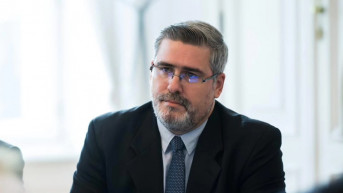
Serbia’s Minister for European Integration, Nemanja Starovic, said it is premature to gradually lift the restrictive measures imposed by the EU on Pristina, warning that a series of obstructions can be expected in the continuation of the process of reintegrating Serbs into institutions in the north, RTV reports.
Starovic recalled that the EU introduced restrictive measures in June 2023.
“At that time, demands were listed for both sides—Belgrade and Pristina—regarding what needed to be done to achieve de-escalation on the ground, primarily in the north of Kosovo and Metohija. And now, with the fact that local elections were held, that Serbs participated, and that Pristina, as they say, did not obstruct the transition process involving the assumption of office by the four mayors in northern Kosovo and Metohija,” Starovic told Tanjug.
He assessed that withholding EU funds had no political effect because, as he said, repression against Serbs brings Kurti more political points.
“According to some analyses we can read, the direct effect of these respective measures over the past two and a half years toward Pristina has been the withholding of up to €600 million, which is not a small amount. But unfortunately, there has been no political effect, because it did not influence the policies pursued by Albin Kurti, who apparently calculates that repression against Serbs brings him more political points than maintaining that financial support,” Starovic pointed out.
Speaking about the recent EU–Western Balkans summit, Starovic reiterated that Serbia’s non-participation was an appropriate response to the very poor message sent to the country, while stressing that EU membership remains Serbia’s strategic goal, RTV reported.
Starovic said that after four years and five consecutive annual reports by the European Commission—the only body competent to issue recommendations and assess whether a country deserves to open clusters—a bad message was sent to Serbia.
“That message, on the one hand, discourages those leading reform processes in Serbia, and on the other hand represents the best possible gift to all anti-European forces, both domestically and abroad. Our decision not to attend that summit was our response to show that we do not agree with that type of message and that we do not wish to participate in it in that way,” Starovic emphasized.
Serbia’s EU membership, Starovic added, remains our strategic goal and strategic choice, one we made a long time ago.
“We must understand that the path toward membership is also very important, because everything we have achieved in terms of economic and infrastructural development and the improvement of the socio-economic position of our people would not have been possible had we not been on the path to membership all these years and had we not been making progress,” the minister for European integration stressed.
Starovic pointed out that constitutional amendments related to the judiciary were adopted back in January 202… year, which at the time was the final requirement for opening Cluster 3.
“Unfortunately, a month later the war in Ukraine began, and this was not valued in the way it should have been. A whole series of reform processes have been implemented, culminating in very important elements this year, such as the adoption of a package of media laws, the adoption of amendments to the Law on the Unified Voters’ Register, and even the conclusion—conducted in this manner—of the process for electing members of the REM Council, where the executive branch and the ruling majority in a broader sense, primarily embodied by the Speaker of the National Assembly, Ana Brnabic, demonstrated a fully inclusive and participatory approach,” Starovic said.
He noted that some of this was recognized in the European Commission’s annual report on Serbia’s progress, while some was not, given that the data set was closed on September 1 of this year.
“We have done a great deal in the four months after the report was closed. And that is certainly the reason why the European Commission once again issued not only an assessment of technical readiness, but also a recommendation to the member states to open Cluster 3—which did not happen,” Starovic concluded.

0 comments