
Starovic: Position of Serbs in Kosovo and Metohija would have been a little better if CSM had been formed a few years ago
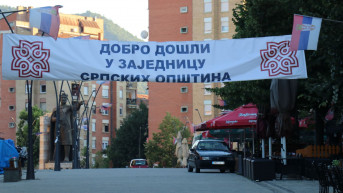
State Secretary in the Ministry of Defense Nemanja Starovic said last night that the Community of Serb-majority Municipalities formation would not solve all of the problems faced by Serbs from Kosovo, but it would certainly contribute to improving their position.
"The Community of Serb-majority Municipalities, also, according to the letter of the agreements concluded from 2013 to 2015, would have full legal capacity, the ability to form public utility companies, and its competencies to represent the interests of the Serbian people before the provincial authorities in Pristina, to have its own symbols and flag, elect a president and vice president, and a whole system of institutions that includes an assembly and a council and a kind of executive board, its own administration," Starovic said in the TV show "Thursdays at 9" on RTS channel.
He is certain that the position of the Serbian people in Kosovo today would have been at least somewhat better if the CSM had been formed a few years ago.
Professor of the Faculty of Law Tanasije Marinkovic said that the rights of Serbs in Kosovo and the protection of the Serbian population and cultural and historical monuments should be prioritized when discussing the further course of negotiations between Belgrade and Pristina.
"When you look at the authorities, as they are now envisaged by the Community of Serb-majority Municipalities, they do not have the original democratic legitimacy," Marinkovic points out, adding that they are not elected by the citizens of those municipalities.
"It could be assumed that what is envisaged by the Brussels agreements will be the second level of local self-government, given the resistance that came from Pristina to an even stronger and more legitimate request for greater competencies in that segment," Marinkovic said.
What has been achieved, he states, is that it is not even the second level of local self-government, but a union of municipalities.
Assistant professor at the Faculty of Political Sciences, Stefan Surlic, stated that the central authorities retain the right to control that type of autonomy, and its capacities, and always have the possibility to derogate from the powers they have already granted, to return them or improve and strengthen them.
"The CSM represents effective autonomy for Serbs because it protects them in the basic spheres that guarantee their survival in Kosovo and Metohija. This primarily means health and social protection, education, local urban and rural development and planning. These are some spheres that guarantee, of course, if there is political will in Pristina, for the Serbs to have their own autonomy, for the rights to be realized within the partial territorial autonomy made up of 10 municipalities, personal – because it gathers local representatives and actors from municipalities with a Serb majority, and cultural – which guarantees that the Serbs have rights to their cultural distinctiveness," Surlic points out.
Dragisa Mijacic from the Institute for Territorial Economic Development asks what will happen to those members of the Serbian community who do not live in municipalities with a Serbian majority.
He cites the villages of Gorazdevac, which is part of the municipality of Pec, and Osojane, part of the municipality of Istok, which, according to this agreement, would not have any benefits from the CSM.
"We need modalities that protect the collective rights of the Serbian people as a whole," Mijacic believes.
Historian Petar Ristanovic says that we should first wait and see if the Albanian side will accept the agreement at all, given that Kosovo Prime Minister Albin Kurti has tied a good part of his political career and, at this moment, his political fate to his strict opposition to the establishment of the Community of Serb-majority Municipalities.
"In theory and in a much more normal situation than the existing one, it could be a framework within which a community can develop. In practice, I think there are great chances that the community can be just an empty framework," Ristanovic concluded.

0 comments