
Starovic: It is clear who is obstructing the agreement
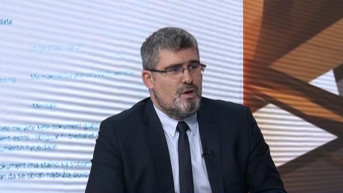
State Secretary in the Ministry of Defense of Serbia, Nemanja Starovic, says that it is very important that Belgrade is not recognized as the culprit in case of the failure of negotiations with Pristina.
"It is important for things to be as they really are, for it to be clearly announced to the international public that the institutions in Pristina are to blame for the absence of an agreement due to the rigid political stance by which they refuse to establish the CSM," Starovic told RTS.
Miroslav Lajcak visited Belgrade prior to the meeting between Serbian President Aleksandar Vucic and Kosovo Prime Minister Albin Kurti in Ohrid. The European Union's special representative for dialogue between Belgrade and Pristina emphasized in an interview with RTS that an important part of the future agreement is the formation of the Community of Serb-majority Municipalities, which he sees as the key to the success of the agreement. He also stated that the CSM should be formed in the manner agreed upon ten years ago.
"Although we heard good and important messages from Lajcak last night, we do not hear such messages from him when he is in Pristina or other locations," Starovic said in this regard.
The shuttle diplomacy of Lajcak and Gabriel Escobar is at work, Starovic says, and adds that every opportunity should be used to clarify that there is a different approach when it comes to the way the Brussels process unfolds.
"The main problem is the lack of mechanisms for implementation, that plan should be an integral part of the negotiation framework," Starovic stated.
Implementation, he repeats, cannot take place without the formation of the CSM, which would represent the primary step in the implementation of anything else.
"It is about the integrity of the process, which would be meaningless if the CSM is not formed as a necessary precondition for working on a framework agreement," Starovic said.
He adds that "an old song - parroting the fact that they have no intention of establishing the CSM" is heard from Kurti and other Pristina officials.
"If it is so, and there is no reason for it to be otherwise, there is nothing wrong with the agreement, but much more important than the negative outcome is which side will be marked as the culprit. It is important that it is not us, but that it be clearly announced to the international public what the real situation is, that the institutions in Pristina, primarily Kurti, are to blame for the absence of an agreement due to their rigid political stance in refusing to establish the CSM. There is no division of blame into two parts, it is clear who is obstructing this," Starovic pointed out.
He also believes that the representatives of the international community have shown a willingness to raise the stakes – recognizing the culprit would bring punitive measures with it.
"If our side rejects the plan, according to them we have an alternative path that would not be good, which is a diplomatic phrase that speaks of the pressures, threats, and ultimatums that await us around the corner. If we were recognized as an obstructing party, we would be faced with harsh consequences, whether we are talking about the suspension of direct public investments, the withdrawal of investments, the closing of plants, or people losing their jobs – we must avoid that at all costs," he pointed out.
Starovic says we should be wise and not even allow sharing of blame, let alone being recognized as the exclusively guilty party.

0 comments