
Starovic: Serbia remains deeply committed to preserving the truth about the Holocaust

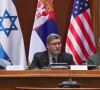
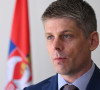
Speaking in Jerusalem, Serbia’s Minister for European Integration and Head of the Serbian National Delegation to the International Holocaust Remembrance Alliance (IHRA), Nemanja Starovic, stated that Serbia remains firmly and unequivocally committed to combating antisemitism, historical revisionism, and any form of relativization of the Holocaust.
At the IHRA Plenary Session, Starovic strongly condemned the rise of antisemitism worldwide, including the recent terrorist attack in Sydney, emphasizing that silence and tolerance toward extremism are just as dangerous as hate-motivated crimes themselves.
“Tolerance of hatred and extremism is not neutrality—it is complicity. In a civilized world, there is no place for justification or relativization of Nazism, antisemitism, or the Ustaša ideology,” Starovic said, according to a statement released by the Government of Serbia.
The Minister stressed that it is particularly alarming that hundreds of thousands of people in Zagreb chant Ustaha slogans, while at the same time the Croatian Parliament hosts “quasi-scientific gatherings that relativize the mass suffering of Serbs, Jews, and Roma in the Jasenovac camp system during World War II.”
He underlined that Serbia, as a full member of IHRA since 2011, has at the government level adopted all four definitions of the Alliance and continuously works to preserve the culture of remembrance, including through the restoration of the “Staro Sajmiste” Memorial Center and the further development of the “Jajinci” Memorial Park.
Referring to the ban on Serbian President Aleksandar Vucic’s visit to the Jasenovac Memorial Complex, Starovic assessed the move as morally and civilizationally unacceptable, describing it as a political instrumentalization of a site of mass suffering.
“Sites of suffering must be above daily politics. Preventing the paying of tribute to the victims represents a grave violation of the culture of remembrance and of the fundamental principles upheld by IHRA,” Starovic emphasized.
The Minister concluded by stating that Serbia remains deeply committed to preserving the truth about the Holocaust and the genocides committed during World War II, while clearly opposing any form of denial, minimization, or distortion of historical facts.
He stressed that the culture of remembrance is not a matter of political choice but a civilizational obligation, and that the fight against antisemitism, hatred, and extremism must be collective, clear, and uncompromising—in the interest of the dignity of the victims and the values of contemporary democratic society.


0 comments