
Starovic tells Zulfaj: Guaranteed rights of Serbs in Kosovo do not exist in practice, you “forgot” more than 800 incidents
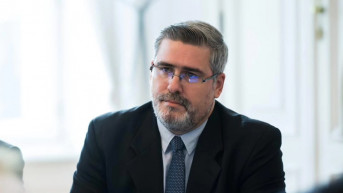
Serbian Minister for European Integration Nemanja Starovic reacted to a post by Kosovo’s chief negotiator with the EU, Jeton Zulfaj, concerning the “guaranteed” rights of Serbs in Kosovo, stressing that those rights did not exist in practice and that Zulfaj had “forgotten” to mention more than 800 incidents against Serbs over the past five years and the refusal to establish the Community of Serb-majority Municipalities.
“Thank you very much, Jeton, for listing all the rights that are guaranteed to Serbs in Kosovo but are definitely lacking in practice,” Starovic wrote on X.
Starovic pointed out that although the Serbian community has ten reserved seats in the Assembly, some of those seats are nevertheless “regularly stolen by token Serbian parties established and funded by caretaker Prime Minister Kurti.”
On the other hand, he noted that the only fully legitimate party representing the Serbian community—the Serb List—has been ostracized and deprived of representation on polling station committees or the position of Deputy Speaker of the provincial Assembly.
“A guaranteed minister—again, in practice, Kurti appoints his own token Serb to the cabinet, even though even the so-called Constitution clearly stipulates that the minister must be nominated by the legitimate representatives of the Serbian community,” Starovic said.
The Minister also observed that the claim that Serbs have reserved judges in Kosovo’s three highest judicial bodies sounded like a bad joke on the very day that a group of Serbian judges had been denied the right to return to their posts.
“Their own ‘state’ television channel—a channel that broadcasts caretaker Prime Minister Kurti’s propaganda 24/7. At the same time, the Serbian people have for years been prevented from receiving even daily newspapers from Serbia itself,” Starovic recalled.
He said that mentioning the right to their own public university was likewise a bad joke because, according to him, the caretaker Government was doing everything it could to undermine and effectively shut down the University of Pristina, temporarily relocated to North Mitrovica, the only Serbian university in the province.
“A veto on any law or constitutional amendment concerning their rights—in practice, this veto right is frequently circumvented through procedural abuse. The best example is the transformation of the so-called KSF into a formation that functions as an army in everything but name,” Starovic wrote.
The Minister also listed several matters that Zulfaj had “forgotten to mention.”
“More than 800 incidents against Serbs over the past five years, as well as 257 Serbs detained on false charges. Free rein for special, militarized, monoethnic Albanian police forces in the north and the construction of permanent bases, resulting in the daily intimidation of the local Serbian population, including the sexual harassment of women. The ban on the Serbian dinar, deliberately imposing severe economic hardship on the most vulnerable members of the Serbian community. The demolition of Serb-owned homes even though the legal prerequisites have not been met. Finally, the refusal to establish the Association of Serb-majority Municipalities, even though it is an essential part of the 2013 Brussels Agreement and the law ratifying that agreement was adopted by a two-thirds majority in the provincial Assembly,” Starovic said.
Zulfaj had previously responded on X to Starovic’s assertion that Serbs in Kosovo were the most disenfranchised ethnic group in contemporary Europe by listing the rights afforded to Serbs in Kosovo.
“This is how Serbia’s Minister for European Integration describes a community that has 10 reserved seats in our parliament, a guaranteed minister, reserved judges in our three highest judicial bodies, its own state television channel, the right to its own public university, and veto power over any law or constitutional amendment concerning its rights. All of this is written in a constitution that anyone can open and read. And as for disenfranchisement: in Serbia, the addresses of Albanians have been ‘passivized,’ and with them go their documents, their healthcare, their education, and their vote. The Helsinki Committee in Serbia calls this ‘ethnic cleansing by administrative means,’” Zulfaj wrote.
He added that this was “not because Nemanja and the Nemanjas of Serbia don’t know this. It’s because they don’t care.”
Two days ago, following the demolition of structures in Bosniak Mahala in North Mitrovica, Starovic said that the Kosovo Police was carrying out Albin Kurti’s campaign of pressure and intimidation and described the case as a prime example of the selective application of the rule of law, while characterizing Serbs in Kosovo as the most disenfranchised ethnic group in contemporary Europe.
0 comments