
Stojanovic: The Brussels Statute for CSM unacceptable if it dismantles what has already been agreed upon
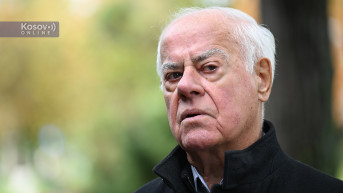
Miroslav Stojanovic, a foreign policy commentator, says for Kosovo Online that the question arises whether the European Union's proposal for the formation of the Community of Serb Municipalities, which Brussels claims is balanced, was presented to the parties as a "take it or leave it" proposition or if there is room for further adjustments.
"For now, we don't know exactly what the draft statute for the CSM contains. I fear that they might be going in the direction of relativizing what was already signed in two Brussels agreements in 2013 and 2015, and the question is how acceptable that is to Belgrade. Belgrade has so far officially insisted that what was written there is unchangeable and should be left as is," Stojanovic notes.
He recalls that the EU's special envoy for the dialogue, Miroslav Lajcak, mentioned even before the summer that there were 15 different autonomy models existing in Europe that could be applied to the establishment of the Community.
"They were evidently creating some combinations, considering even the old Ahtisaari plan, about how the CSM should really look. More information about the EU's proposal for the CSM statute is coming from Pristina, following the meeting that opposition leaders there had with Lajcak. For instance, Ramush Haradinaj was quite talkative and stated that he had read everything and assured the Serbian community that they were in a winning position. However, he consistently insists that it is entirely 'from A to Z' integrated into Kosovo's legal system," Stojanovic says.
He emphasizes that it remains to be seen what Belgrade's stance will be regarding the EU's proposal, whether the Serbian side will insist that what has been agreed upon should not be dismantled because, as he warns, "turning previously reached agreements into a kind of chaos could occur."
Stojanovic adds that the international community has always come up with initiatives and platforms, and for some time, there was an emphasis on standards before status.
"Standards are hardly mentioned anymore. Among those who believe that normalization is possible, I'm not talking about what status Kosovo will have. So far, Belgrade has been inflexible in accepting the southern Serbian province as an independent state. But in the normalization of life for people living there, whether Serbs or Albanians, some form of security and certainty should be provided so that there are no political minefields in every situation, whether it's license plates for vehicles, goods that can't cross administrative crossings, or now medicines. Normalization is essential, and if there is goodwill in the international community, Belgrade, and Pristina, it would allow people to think about the future. The situation is highly uncertain for everyone, and that's the worst part. In such situations, small fires can always ignite and turn into a bigger blaze," Stojanovic points out.
He points out that he has always believed that the Kosovo knot cannot be untied overnight, and it is difficult to find a solution within the square of the circle, especially given the distant positions of Pristina and Belgrade.
"It will change, I believe; many more envoys will work on it, but with less success. Who still remembers Baroness Ashton, who started the whole process, and Mogherini, who continued it? I believe that in the new reshuffling of the cards after the European Parliament elections, even Lajcak, who is already quite in that position, may not be on the political scene with the same attributes as he initially came with. He had significant support from the Germans; he was the choice of former Chancellor Angela Merkel, but things have really not changed," our interlocutor notes.


0 comments