
Subotic: Most EU members like the ideas from the non-paper, but some insist on the right to veto
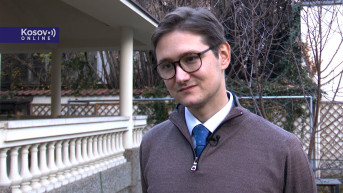
Strahinja Subotic, Program Manager at the Center for European Policy, tells Kosovo Online that Slovenia and Germany currently lack sufficient support from EU member states for the ideas proposed in the non-paper, which suggests abolishing the veto rights of EU members during voting on technical decisions in the pre-accession process, such as opening negotiation clusters. However, he believes it is significant that discussions are taking place and that there is a convincing majority of member states that like the idea.
“To abolish unanimity, a unanimous decision is required. This is indeed a paradox and challenging to overcome. We have countries like Hungary that insist on retaining the veto in all areas where it is possible to do so. Cyprus, as a small state, fears that its interests, especially concerning Turkey, will be bypassed and ignored if it gives up the veto right. And then there is a major country like France, still deliberating whether to abandon the veto because it is a founding member of the Union and believes it should have a say,” Subotic explained.
He notes that the non-paper's idea, which has been discussed for the past six months, is to accelerate decision-making processes related to enlargement policy.
“Both political and technical decisions concerning enlargement require unanimity. The proposal suggests that political decisions, such as opening and closing negotiations, should continue to be made unanimously. However, as a compromise solution, they propose transitioning to qualified majority voting for technical steps, such as opening negotiation clusters. The aim is to expedite the accession process, given that one, two, or three countries can often misuse their veto rights to block a country, even when it has fulfilled all necessary reforms, to open a cluster. Opening clusters is a technical issue that can have an encouraging effect on both citizens and decision-makers. It is often a shame that unanimity is still required for such technical matters,” Subotic said.
Slovenia and Germany, he adds, are the duo pushing for the enlargement policy, Germany as the engine of the EU, and Slovenia, which now has the EU Enlargement Commissioner and understands the Western Balkans region well.
If the non-paper were to become official policy, Subotic points out, it would be significant for countries in the “initial intermediate phase” of joining the EU, as unanimity would still be required for closing chapters and for the final decision on a country’s accession to the Union.
“For example, the non-paper is not relevant for Montenegro because it has already opened all clusters. It is relevant for Serbia, which still has clusters to open, and for Albania, Ukraine, and Moldova – countries at the beginning or, like Serbia, somewhere in the middle. Regarding North Macedonia, this non-paper would not change the situation on the ground because it needs to complete the initiation of negotiations, a procedure that requires unanimity. Even if Bulgaria accepted the non-paper, it would still retain its veto right and could demand that North Macedonia meet all necessary conditions before negotiations are officially opened,” Subotic explained.
He adds that if the EU had accepted the non-paper, Serbia would have been able to open Cluster 3, as a qualified majority would exist even with eight member states opposing.



0 comments