
Sunter: It is difficult to speak of an arms race in the Balkans, all European countries are strengthening their defense industries
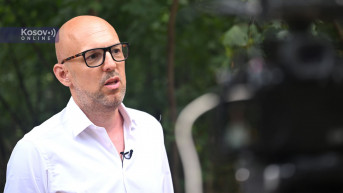
Security expert Daniel Sunter told Kosovo Online that it is very difficult to speak of an arms race in the region and that this is a convenient media term, because nothing is happening here that is not also happening in the rest of Europe, as everyone is working to strengthen their defense industrial bases.
“So, everyone is working to strengthen their defense industrial base. This is one of the conditions now being set not only by NATO, but also by the European Union for its member states. So, this also applies to the countries of the region. They are doing this, receiving certain financial resources that they can invest in this development, and there are various interesting regional examples,” our interlocutor says.
He points out that what differs are the political disputes that exist in the Balkans.
“So, here in our region, this is primarily a question of the status of Kosovo, and it is therefore perceived as a security issue. But the answer to the question of how much of a security risk it represents depends on whom you ask. In other words, those countries that have not recognized Kosovo’s independence naturally view it one way, while those that have recognized it view it another way. But what they have in common is that they all, in some way, recognize the Western Balkans as an area where the situation is not completely peaceful, and they project their military power through participation in NATO and European Union missions,” Sunter said.
Regarding the announced construction of an ammunition factory near Djakovica, Sunter points out that Turkey has emerged as one of the main partners and supporters of the authorities in Pristina in creating such capacities.
“So they are now doing exactly that when it comes to this factory. The factory is primarily expected to produce 5.56 and 7.62 mm small-arms ammunition, and, at some point in the future, drones as well,” Sunter said.
Sunter emphasizes that, when it comes to the region, the most interesting example is Romania.
“Romania is present in the Western Balkans, namely through the KFOR mission in Kosovo and the EUFOR mission in Bosnia and Herzegovina. But they are also building their own capabilities. In 2026, Romania had a military budget of around nine to ten billion dollars. That is an enormous amount of money. Major equipment is being purchased, primarily from the United States. They acquired the Patriot system, they acquired HIMARS, and they purchased several dozen F-16 fighter jets. They have now also ordered fifth-generation F-35 fighter jets from the United States. Greece is doing the same. So Romania and Greece, in this broader regional context, are the largest investors in building their national defense capabilities. But all of this is also happening through bilateral arrangements with the United States, as well as through the broader European and NATO components. For example, Rheinmetall, the major German conglomerate, is now setting up ammunition production plants in Romania and Bulgaria, while they have already built one in Hungary,” he says, continuing:
“Hungary, again, has very specific and interesting experience when it comes to building its defense industry. Above all, they have a strategic partnership with Germany. The Germans sold them new Leopard tanks and, together with the Germans, they built a highly modern facility for producing infantry fighting vehicles, where they manufacture Lynx vehicles, which are highly modern. Rheinmetall opened an ammunition factory there, while the Hungarians also opened a helicopter-parts factory with Airbus, because all the helicopters used by the Hungarian military are manufactured by Airbus. So there are many interesting experiences here.”
As for Serbia, Sunter explains that it could most closely be compared with Bulgaria.
“So, we have a country with a rich legacy from the socialist era, specifically in the defense industry, which has survived and produces ammunition and some combat vehicles, as Serbia does, for example. However, when you look at what is behind that armor, on the one hand some things are manufactured here, but the key components are imported from the West. So, if we are talking about our armored vehicles, they are mostly powered by American engines and American transmissions, so this is a model that works here. Bulgaria, meanwhile, has production of ammunition and various types of small arms, so I would say that this paints a rich regional picture,” our interlocutor explains.
Regarding the transformation of the Kosovo Security Force into an army, which is currently underway and is expected to be completed in 2028, our interlocutor notes the following:
“You are creating the image that you are building a state and establishing a state. But, on the other hand, the question arises as to what your actual capabilities are and what you can achieve with them. If you look at what the authorities in Pristina have been doing in recent years, when we talk about the internal situation in Kosovo and the projection of force in the north, the Kosovo Police and, above all, its special units have been used, rather than the Kosovo Security Force, because they would not even be permitted to do that. Any kind of deployment of the Kosovo Security Force requires KFOR approval. So, that did not happen. Thus, the Kosovo Security Force was created more as a kind of structure. The original idea was to demilitarize the former KLA, clear out those old wartime structures, and create a small organization that would be compatible with and under the control of Western institutions and Western partners.”
He says that the key question nevertheless remains that of these capabilities and what Pristina sees as the possibility of using them in missions with partners and with countries with which it has been participating in exercises for years.
“Well, now, of course, the question is how this is perceived in the surrounding countries. Naturally, it is perceived as most problematic in Serbia, but if you look at the broader regional context, all these countries project their military presence precisely onto the territory of Kosovo and Bosnia, because they recognize that this issue remains unresolved and they are present there. So, of course, this remains an open question. We will see what this modernization will bring to Pristina and to what extent, but I think it is difficult to speak of any serious deterioration of the region’s security, because NATO remains the main factor and guarantor of Resolution 1244 and the Military Technical Agreement there. So, as long as that remains the case, as long as this composition of the international presence remains in place there, it is difficult to speak of any unpredictable escalation,” Sunter concludes.

0 comments