
Surlic: EU countries have not insisted at all that Pristina unblock crossings for Serbian goods
Assistant Professor at the Faculty of Political Sciences in Belgrade, Stefan Surlic, told Kosovo Online that European Union countries have, so far, in no way insisted that Pristina unblock the border crossings for the import of Serbian goods, which have remained closed following the Kosovo government’s decision from last October to replace the full ban with the opening of only the Merdare crossing.
"We can see that there are no sanctions whatsoever, so the policy of Albin Kurti’s government has been: ‘as long as we can implement what we intended without any serious consequences, we will continue in that direction.’ In doing so, Kosovo is clearly violating CEFTA rules. This measure, which has lasted nine months already, is causing enormous damage, not only to the economy but also to people who are used to those products, who want to buy and trade. It especially affects the Serbian community. However, there is no willingness to listen," Surlic emphasized.
He added that Pristina in this case has a “technical justification,” since the scanners that are supposed to arrive from Germany have still not been delivered, something that should have happened much sooner.
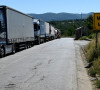
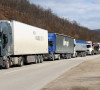
"The scanners should have first been installed at the Merdare crossing to avoid the daily traffic jams and long lines, and then also at the other administrative crossings. But essentially, as long as there is no goodwill from Pristina, I believe that even when the scanners do arrive, some other technical reason will be invented to prevent the decision from changing," Surlic assessed.
Considering that the German embassy in Pristina has announced that the scanners are expected to be delivered during 2026, Surlic says it is clear that this is not a current priority for the German government.
"This was an active plan back when Sarrazin was the mediator and was very interested in getting the scanners delivered quickly, in order to present Germany as having played a decisive role in at least some aspect of the normalization process between Belgrade and Pristina. After his departure, the matter was essentially shelved, and now there is no one within the German system assigned to accelerate and unblock the process," Surlic pointed out.

0 comments