
Surlic: The EU is losing credibility in the negotiations between Belgrade and Pristina
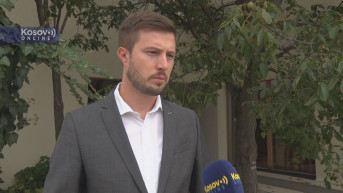
Assistant Professor of the Faculty of Political Sciences Stefan Surlic said that the credibility of the European Union in the negotiations between Kosovo and Serbia was questionable and that the fate of the Franco-German proposal would be the same as the fate of the Brussels Agreement, Blic reports.
"Following the statements of the Prime Minister of the temporary institutions and their representatives, and it was obvious that there would be no progress, radical-nationalist rhetoric was created that is now creating a path of dependence in Kosovo. There is increasing support from the public and citizens to not give in to the negotiations and not to allow the formation of the CSM, and since that was one of the topics, of course, the whole process was questionable, that is, it was known that there would be no progress," Surlic said for Tanjug.
According to him, when we talk about the credibility of the EU in the negotiations, it is still very questionable.
"Lajcak announced that something had to happen in the coming months if they wanted a result and that if there was no result, I think the fate of the Franco-German proposal will be the same as the Brussels Agreement - partially implemented, maybe not at all," Surlic says.
Washington was involved all the time, adds Surlic, but a certain message from the United States Ambassador to Serbia, Christopher Hill, who said, "We stand behind Borrell," could be extracted.
"In a way, they shift all the responsibility to the EU. You said that you would come out with a result, as far as our pressure is concerned, we did what we could, and now we attribute all the "credits" to the EU, and if there are no results, and then it will be precisely the defeat of the EU's credibility. We may come to a situation where the EU will formally announce: We have not succeeded in anything, there is no more point in meetings, Americans, do you want to take on a much more formal role than so far," Surlic assessed.
It was interesting, he added, that the proposal in Brussels had been difficult for both Belgrade and Pristina and that it was not true what Kosovo Prime Minister Aljbin Kurti said that he had only had a proposal.
"The Europeans have drawn up a plan, so that, in parallel with the formation of the CSM, the condition before Belgrade is to recognize Kosovo without an asterisk in regional forums, secondly to recognize documents, license plates, and everything... perhaps with the same general disclaimer as it was before, but essentially it is a big step forward for Belgrade. Later, the third phase with the special status of the church and in general when the CSM has already been fully implemented," Surlic said.
These were painful cuts, pointed out Surlic, and added that both the EU and the US were aware that Belgrade had made a big concession because it had agreed to such a plan.
"And now that you have, in addition to that parallelism, the rejection of Kurti, then it is clear that Pristina is absolutely the culprit and that it should bear the sanctions," Surlic said.
He pointed out that the policy that Kurti was interested in was not the CSM.
"He knows that he will not get the agreement he is demanding from Belgrade, on mutual recognition, and what he has been doing in the past months is creating a new reality – the Serbs can live in Kosovo, you can suffer and pay, but under the auspices of the system of Kosovo institutions, from fishing to issuing of some licenses or documents - you are a part of the Kosovo system, Kosovo municipalities. He completely changes the reality in the north of the southern province in a short period of time," Surlic assessed.


0 comments