
Surlic: Kurti has the international partners' support to change the course of the dialogue with an aggressive policy
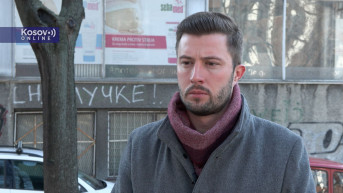
Stefan Surlic, an associate professor at the Faculty of Political Sciences, believes that Kosovo Prime Minister Albin Kurti has certain channels of support in the international community that enable him to change the course of the dialogue with numerous incidents and an aggressive policy, obstructing the key issue for Serbs, which is the formation of the Community of Serb Municipalities, from being addressed.
Surlic notes that Pristina has not abandoned its intentions despite hearing a unanimous voice from the Quint countries calling for suspension regarding the decision of the Central Bank of Kosovo to abolish the dinar.
"I believe that Kurti has the support of certain international partners, although we heard a unanimous voice from the Quint countries on this issue. I think there are certain channels of support that enable Kurti to pursue a very aggressive policy, which began with the occupation of the north, conducting illegitimate elections, expropriation, baseless arrests, and the decision to abolish the dinar is just one of a series of measures," Surlic told Kosovo Online.
He assesses that the focus of Kosovo Prime Minister Albin Kurti is currently on internal matters and parliamentary elections in Kosovo.
"In a way, the focus is on domestic politics and something that the Self-Determination Movement has announced, namely the end-of-year elections. I believe Kurti wants to enter the parliamentary elections with a message that he has fully integrated the north, severed all ties between Serbs and Belgrade, and that is his legacy for the next term," Surlic emphasized.
Our interlocutor emphasizes that the decision of the Central Bank of Kosovo to abolish the dinar postpones the entire process of forming the CSM, reminding that the initial idea was for the CSM, together with its formation, to include some topics, including currency.
"It is clear that all previous agreements and arrangements meant specifying how Belgrade would transparently finance the Serbian community in Kosovo. As O'Brien has already pointed out, coordination between Belgrade and Pristina is also necessary on this issue. This means no unilateral acts that hinder the ultimate goal, which is the formation of the CSM. There needs to be a minimum of trust and compromise between the two sides, and these issues need to be resolved concurrently with the steps accompanying the formation of the CSM," Surlic concluded.



0 comments