
Surlic: Lajcak's departure before the end of his mandate would further slow down the dialogue process
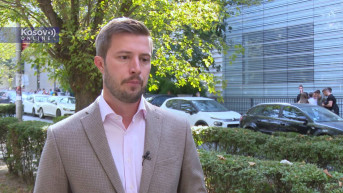
Stefan Surlic, an associate professor at the Faculty of Political Sciences in Belgrade, assessed for Kosovo Online that the potential departure of Miroslav Lajcak from his role as a mediator in the dialogue between Belgrade and Pristina before the end of his mandate and before the European elections would further slow down the negotiation process.
Following the victory of the "Direction" party in the elections in Slovakia, there were speculations in some media that Lajcak might return to the position of the Minister of Foreign Affairs of that country and leave his role as a negotiator in the Belgrade-Pristina dialogue. According to the EU decision from 2022, Lajcak's mandate as a mediator in this process is scheduled to last until August 31, 2024.
"Lajcak's departure would mean that we wouldn't have an institution that serves as the main mediator between Belgrade and Pristina. Given the recent events in Kosovo and Banjska, it is crucial, especially for European leaders, to have someone responsible for the dialogue. If Lajcak leaves, essentially dialogue will further deteriorate, and it will slow down," Surlic says.
He adds that the dialogue has not functioned formally, as demonstrated by the meetings of the leaders at the highest level in Brussels.
"We witnessed a complete blockade of the process, but without a formal mediator, the situation would be even more complicated," Surlic says.
Reflecting on speculations about who Lajcak, as a mediator, favored more, Belgrade or Pristina, Surlic mentions that he is a career diplomat.
"Nevertheless, he is a career diplomat. We remember his statements; he was very sensitive both in Belgrade and Pristina, trying to align his views with two very opposing sides politically. However, it is a fact that Pristina constantly, from the beginning of the process, claimed that Lajcak was on Belgrade's side, that he was biased, and that he prevented an agreement from being reached," Surlic recalls.
He adds that, on the other hand, Belgrade had trust in Lajcak.
"There was a kind of basic agreement and mutual trust. Lajcak tried to be status-neutral to some extent while still trying to make some progress in the dialogue," Surlic concludes.

0 comments