
Surlic: Through the CSM statute, the EU has signaled a desire for education and healthcare to have autonomous status
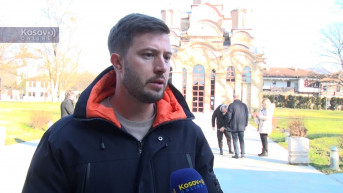
The European Union has clearly indicated through the statute of the Community of Serb Municipalities that it wants education and healthcare to be of vital importance for the Serb community, to have their own special autonomous status, and that only what is acceptable to the Serb community can later become a form of integration, Stefan Surlic, Assistant Professor at the Faculty of Political Sciences in Belgrade, told Kosovo Online.
On the need to begin the process of integrating the healthcare and education systems, which would be implemented in coordination with the European Union, Kosovo’s caretaker prime minister Albin Kurti informed ambassadors accredited in Kosovo two weeks ago. Surlic, however, says that implementing integration in coordination with the EU is merely a catchphrase.
“Of course, the Community of Serb Municipalities is within the Kosovo system and there will have to be a certain type of coordination, but this by no means implies unilateral actions that would result in the complete severing of ties between the education and healthcare systems and the institutions of the Republic of Serbia and Belgrade,” Surlic emphasized in a statement for Kosovo Online.
If something like that were to happen, he says it would create even greater insecurity among the Serb community.
“What we have from the latest research is that Serbs who still live in Kosovo are willing to remain there only if certainty is ensured for them, above all in healthcare and education. If insecurity arises there, if there is a high degree of uncertainty in those areas as well, it will strongly affect the prospects of the Serb community in Kosovo. That is why I believe international actors cannot allow such a scenario to develop, because it would effectively mean the end of the Belgrade–Pristina dialogue and complete uncertainty for the Serb community in Kosovo,” Surlic noted.
Asked whether an attempt at unilateral integration of these two systems would lead to a new confrontation between Pristina and the international community, Surlic says that so far there have been no clear and firm sanctions from international actors, because there is no consensus among them.
“They have a unified message that dialogue is necessary and that both Belgrade and Pristina need to make certain concessions, but we have not yet heard that Pristina is the one actually blocking the process, that it must unblock it and must above all allow the formation of the Community of Serb Municipalities and refrain from unilateral actions,” he pointed out.
There are no indications, he adds, that tougher sanctions might be introduced.
“Even the mild ones that were imposed are being lifted. So, unfortunately, there is no stronger message, except for the hope that Washington might become more engaged. For now, we do not see that the United States is particularly interested in exerting key pressure on Pristina to change its policy and enable the continuation of the dialogue,” Surlic concluded.


0 comments