
Tanaskovic: The authorities in Pristina will not deceive anyone in UNESCO; they are guided by laughable standards
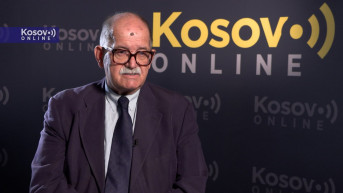
Albin Kurti's Facebook post stating that his government is working on restoring three old houses in Prizren to nominate the city’s historical center for UNESCO's World Heritage List is highly unserious but entirely in line with the Pristina authorities' approach of constantly making statements to the domestic, regional, and global public, thereby demonstrating their supposed seriousness and initiative, says Darko Tanaskovic, former Serbian ambassador to UNESCO, for Kosovo Online.
He adds that elections are also approaching in Kosovo, so "Kurti and his group are genuinely and continuously active only in harassing Serbs."
"If he had added a sentence to his statement saying: 'when Kosovo becomes a member of this international organization/agency,' then at least it would align with the actual order of things. Namely, only a member state can submit an initiative to inscribe a cultural asset on the UNESCO list, and this must be done through an established and complex procedure. 'Kosovo' is neither an independent state for much of the world, nor a UNESCO member," emphasizes Tanaskovic.
The restoration of a few rundown houses in Prizren as a step toward inscribing Prizren’s bazaar on the UNESCO list, he argues, hardly deserves a comment and demonstrates the laughable standards that Pristina’s authorities use in the field of culture.
"Prizren is indeed a genuine urban gem and could, under happier general circumstances, almost entirely be inscribed on the UNESCO list. But the brutal Albanian legal, political, and cultural usurpation has erased this magical city from the universal civilizational horizon. For instance, two or three mosques, a bridge, and a few tekkes could perhaps be listed as UNESCO cultural heritage, but this is unthinkable after the burning of the Church of the Virgin of Ljevis and its encirclement with barbed wire. If simply restoring and painting a few Oriental houses from the Ottoman period were enough, hundreds of Eastern towns worldwide would end up on UNESCO's list," says Tanaskovic.
Prizren, he notes, is "Byzantine by origin, Serbian with a high medieval culture, Ottoman by historical destiny, and only in contemporary unfortunate captivity an Albanian city."
"Let Kurti go ahead and restore the bazaar where Serbian, Turkish, and Albanian were once spoken equally, but today only Albanian and broken English are spoken. He won’t deceive anyone at UNESCO. After all, wasn't Sinan Pasha’s Mosque built with monastery stone from the ruined Holy Archangels? That's also noted in the book Ottoman Architectural Works in Kosovo (1999) by Prizren native Raif Vrmica, published by the Turkish Ministry of Culture. Surely that isn't Serbian propaganda," Tanaskovic comments.
Our interlocutor reminds us that Kosovo attempted to "sneak" into UNESCO in 2015 and was close to achieving this goal but failed to secure the required two-thirds vote at the General Conference.
"Then in 2017, at the insistence of their patrons, especially Germany and France, they withdrew an already sent application letter as better-informed and more responsible parties than Pristina’s political team assessed there was no chance of success. Since then, they have not formally applied again, but Kosovo officials have repeatedly emphasized that, as part of their program to affirm the international subjectivity of their 'state,' they are not giving up on joining UNESCO," Tanaskovic concludes.


0 comments