
Tanaskovic: The new KFOR Commander will not receive orders from Turkey
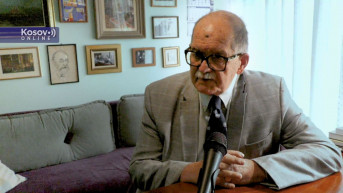
Former Ambassador of the Federal Republic of Yugoslavia to Turkey and Islamologist Darko Tanaskovic says for Kosovo Online that considering Turkey supplies Kosovo with weapons and military equipment and trains their officers, Serbia may not particularly favor the appointment of a new KFOR Commander from Turkey. However, he emphasizes that the KFOR Commander does not receive orders from Ankara and will not receive them even when the Commander of this NATO mission is a Turkish national.
In the coming days, Turkish Major General Ozkan Ulutas will take over command of KFOR for a one-year term, marking the first time a Turkish officer leads KFOR. Tanaskovic believes that this change is unlikely to bring significant differences in terms of realpolitik compared to the "existing complete bias of KFOR".
Our interlocutor adds that the addition of a contingent of Turkish forces in Kosovo during recent tense situations and the appointment of a Turkish general as the KFOR Commander is seen by Turkey, both politically and domestically, as significant achievements that they aim to capitalize on.
"In Turkish newspapers, there are big headlines that 'Turkish soldiers are back in Kosovo', and historically, we know what that means and what connotations it carries. From a practical perspective, it is a fact that Turkey has long been one of the privileged suppliers, not only of arms and military equipment but also a country that trains officers from various Balkan states, including Kosovo. In that sense, Serbia may not particularly favor the fact that the KFOR Commander is from Turkey. However, on the other hand, I don't think we should overemphasize the significance of this fact because, firstly, the KFOR commander does not receive orders from Turkey, and he will not receive them from Turkey even when he is a Turk. Of course, the Turks always try to incorporate their interests into NATO policy, but it is not decisive. It is known where the KFOR Commander receives his orders, certainly not from the Security Council, let alone from Turkey. So, from that perspective, we cannot expect significant changes," Tanaskovic says.
As he notes, on a human level, it is possible to talk about the Turkish General having certain sympathies toward Muslim Albanians in comparison to the Orthodox Serbs, but he also believes that it is not crucial.
"Turks are very disciplined officers, and he will strive to behave as objectively as possible. In fact, I believe that he will try to act more objectively than what would be expected from, say, an Italian, precisely to avoid creating suspicions of bias. All in all, and as we have seen in the tragic events in Banjska, we cannot speak of KFOR's objectivity, but we can say that they will somewhat respect certain boundaries in their engagement, which will not go beyond what would be a complete failure of their mission both morally and militarily. I do not expect this to be a significant change, but of course, a Serb cannot rejoice when a Turk is back in Kosovo. They were in the 'Sultan Murad' barracks, and symbolically speaking, we cannot overcome those resentments. From a realpolitik perspective, I believe there won't be much of a difference compared to the already evident bias of KFOR," Tanaskovic concludes.
Speaking generally about Ankara's policy, our interlocutor states that Turkey is regionally very interested in the Kosovo and Metohija issue since the Balkans are one of the priorities of their "neo-Ottomanist foreign policy, even broader national doctrine".
"They are interested in everything happening in the Balkans, especially concerning Muslim communities, and we know that Albanians in Kosovo are 90 percent or more Muslims. Turkey consistently supports Kosovo, although, so to speak, it strives to maintain good relations with Serbia in parallel and develop them because it understands that without Serbia, it cannot realize even those neo-Ottomanist plans as effectively as it would in cooperation with Serbia," Tanaskovic says.
0 comments