
Tanaskovic: Syria, Lebanon, and Iraq also face issues of acutely or potentially threatened territorial integrity
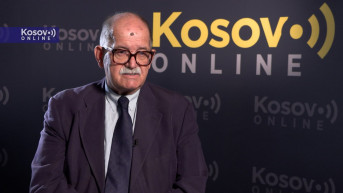
The lack of enthusiasm for recognizing Kosovo’s separatist statehood, exhibited by many predominantly Muslim countries, is by no means primarily the result of any Iranian influence, as suggested by Enver Hoxhaj, but instead, it stems from the fact that these countries themselves face issues of acutely or potentially threatened territorial integrity. This is particularly true for Syria, Lebanon, and Iraq, whose recognition of Kosovo the Kosovo politician and diplomat hopes for, Darko Tanaskovic, islamologist and former ambassador to Turkey, said for Kosovo Online.
Tanaskovic was responding to Kosovo Online's question about whether political changes in Syria might influence the Kosovo issue, particularly regarding whether Syria and other countries like Lebanon and Iraq might recognize Kosovo in the future. This comes in light of former Kosovo Foreign Minister Enver Hoxhaj’s claim that the fall of Bashar al-Assad’s regime could provide an opportunity for Kosovo to secure recognition from these countries as they supposedly "exit Iran’s sphere of influence."
However, Tanaskovic notes that this does not mean new recognitions are impossible, especially if Turkey or other influential international actors were to lobby for them in Syria, because, as he said, “right now, everyone seems to be ‘fishing in troubled waters.’”
Regarding Hoxhaj, he describes him as a provenly experienced and capable diplomat with particularly strong connections in some European capitals, whose statements and assessments should be taken seriously.
“In this specific case, aside from the fact that his message is undoubtedly part of an electoral campaign in Pristina and aims to discredit the current foreign policy leadership there, a tactic Hoxhaj systematically employs, it also contains elements that are undoubtedly relevant. At the same time, the conclusion that regime change in Syria is a ‘golden opportunity’ for gaining new recognitions of Kosovo’s independence from countries like Syria, Lebanon, and Iraq, due to a predicted weakening of Iranian influence, rests on several problematic assumptions. Hoxhaj sees the ‘victory’ of Sunni Islam as the fundamental positive change, implying that Kosovo, whose representatives continually emphasize their para-state’s pro-European and democratic orientation, counts on the solidarity and support of Islamic world actors, many of whom have serious terrorist associations,” Tanaskovic argued.
Hoxhaj’s reference to Kosovo’s successful campaign for recognition during the “Arab Spring,” when Kuwait, Egypt, Libya, and Yemen recognized Kosovo, is numerically correct, according to Tanaskovic. However, he points out that the Kosovo politician neglects the fact that these recognitions, with the possible exception of Kuwait, were not accompanied by the development of any substantive diplomatic or other relations with the mentioned countries.
“For instance, Islamist President Morsi unilaterally recognized ‘Kosovo’ shortly before losing power and without appropriate consultations with relevant government agencies. Subsequently, official Cairo essentially ‘froze’ this recognition and did not, for example, vote for Kosovo’s membership in UNESCO in 2015. As for Libya and Yemen, there is no need to highlight the internal chaos and multi-power struggles within these two states, making any institutional relations with ‘Kosovo’ utterly illusory. It’s hard to imagine that General Khalifa Haftar, for instance, is prioritizing improving relations with ‘Kosovo,’ and even less so the Yemeni Houthis,” Tanaskovic emphasized.
Nonetheless, he notes that new recognitions of Kosovo’s independence by Muslim countries are not impossible, but that Hoxhaj’s logic does not appear to rest on firm foundations.
“For Iran, the stance on ‘Kosovo’ is not based on some Shia aversion to Sunnis, as if Kosovars, on the whole, are particularly devout Sunnis, but rather on the perception of ‘Kosovo’ as an American and Western project. For them, Kosovo is analogous to Israel in this regard. I personally confirmed this view during my time in Tehran,” Tanaskovic said.
Given the current government in Pristina’s occasional moments of satisfaction from a few symbolic gains in recognition, Tanaskovic believes they should be far more concerned about losing reputation and trust among some of their most powerful Western sponsors. These sponsors, despite everything, continue to uphold a pro-Kosovo policy.
“However, they might consider tactically modifying their approach and trying out some different protégés on the ground. In this context, the highly uncertain recognition of Kosovo by Syria, Lebanon, or Iraq is of little real significance or impact. Of course, Serbia must remain diplomatically vigilant and active, as it has been so far,” Tanaskovic concluded.

0 comments