
Tanaskovic: UNESCO Committee's decision confirms no improvement in the situation of four Serbian heritage sites in Kosovo on the endangered list
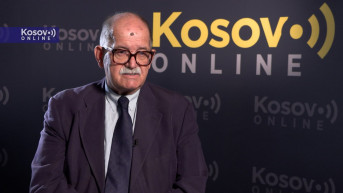
Former Serbian ambassador to UNESCO, Professor Darko Tanaskovic, says for Kosovo Online that the UNESCO World Heritage Committee’s decision to keep four Serbian medieval heritage sites in Kosovo on the List of World Heritage in Danger confirms that there has been no real improvement in the situation, despite the constant insistence by the authorities in Pristina that these sites should be removed from the endangered list.
"In that sense, this is positive for Serbia, although, of course, it is not positive that these highly significant and universally valuable cultural heritage sites are on the list of endangered sites. The decision was expected and is not sensational because none of the conditions that could contribute to these sites being removed from the endangered list have been met," Tanaskovic said.
He explains that several conditions must be met to remove Serbian sites from the endangered list, and one of the three main conditions is full and constant protection of the sites in a secure and stable political environment.
"It is assessed that the political environment is still not stable. The second condition is an agreed medium-term plan for the restoration of frescoes, including a preventive conservation regime and the conservation and rehabilitation of the entire site. And that, of course, is not something that can even be discussed. What medium-term plan, who would make it, with whom? And the third is the implementation of a site management plan, the full establishment of so-called 'buffer' zones and site boundaries, including their legal protection. Considering everything that is happening – roads being built next to monasteries, the formal return of usurped property to the Decani Monastery only after significant political intervention – what 'buffer' zones, what respect for legal norms, none of this exists, including the appropriate law. Therefore, much would need to be done for these sites to be removed from the endangered list, and as we know, not even the minimum conditions for this exist," Tanaskovic emphasized.
He points out that there was a new piece of information in the media this year, supposedly for the first time mentioning political instability as the reason why these sites are on the list, but he says that this is not true.
"From the very beginning, since these sites were inscribed on the list in 2006, political instability, termed post-conflict political instability, has always been highlighted as one of the most significant factors and this has remained unchanged, which, in the end, I repeat, is positive for us, although it is not good in itself," our interlocutor noted.
Between the two sessions of the UNESCO World Heritage Committee, Tanaskovic explained, there is always a struggle to remove something from the list or to add something to it.
"This is a dynamic that continually takes place from one session to another, and the World Heritage Committee meets once a year. There are countries on whose territories there are heritage sites considered endangered, not because of political instability or physical endangerment, but simply because those countries do not care for them in the manner UNESCO standards require, leading to expert proposals to put the sites on the endangered list, which people dislike because it reflects poorly on the care of cultural heritage. On the other hand, for example, Palestinians have always insisted that their cultural heritage sites be put on the list because they are endangered by Israel. So, it is a dynamic in which our four cultural heritage sites, as I call them because that is the official UNESCO terminology, remain very firmly on the list of endangered sites," Professor Tanaskovic concluded.



0 comments