
"They killed my mother in the March Pogrom; I was only 9 years old, I miss her every day"
North Mitrovica citizens will never forget March 17, 2004, the day when two Serbs were killed by a riotous crowd of Albanians who stormed the main bridge over the Ibar throughout the day with the intention of entering the town and settling accounts with the Serbs there.
The initial trigger for mass attacks on all Serbs throughout Kosovo was the false news that the Serbs were guilty of drowning two boys of Albanian nationality in the village of Cabra, which is located in the Zubin Potok municipality.
The biggest pogrom by the Albanians happened on that unfortunate date for the Serbs in Kosovo, in front of international representatives. Numerous KFOR soldiers, primarily from the French and Danish contingents, together with the members of the UNMIK police at that time, failed to protect the Serbs in North Mitrovica, and 36-year-old Jana Tucev and 63-year-old Borivoje Spasojevic died in the clashes on and around the bridge.
Jana's daughter Eleonora, who was only nine years old on March 17, 2004, will always remember that date, and as she says, her dearest being was taken away from her on that day, who was supposed to be her support, love, and example throughout her life.
Eleonora says that even after 19 years, she still remembers what happened, even though she was a small child returning home from school. Hell awaited her in the street near the "Three Skyscrapers" settlement, where she lived with her father, mother, and brother.
"I remember it like an ordinary day; I was a child, so I can't remember everything exactly. I was coming back from school, and everything happened in 15 minutes, from the shooting to losing everything," Eleonora says.
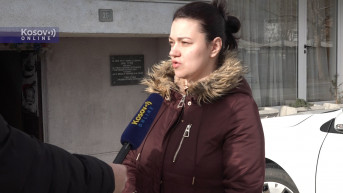
In front of the cameras, scared and with few words, she reveals what she feels and what she remembers about that day, but points out that she has revived the memory of her mother through her daughter, whom she named after the tragically injured mother, Jana.
"I was fortunate to have a daughter as my first child, and I decided through great pain that she should be named after my mother. She is a kind of substitute for sadness and pain, even though it is impossible," Eleonora continues.
She misses her mother every day, and she uses pictures and stories to explain to her children, who have never met their grandmother, what kind of person Jana was.
"I miss her a lot, especially now that I need my mother's help, to take care of them and be my right hand, and I don't have that right hand. I am trying to explain to them what she was like through pictures. I try to find pictures of her smiling so that they remember her as a cheerful and smiling woman because she was such a person who was always smiling and who always tried to help everyone," Eleonora recounts her memory of her mother.
Through memory, she says that she cultivates what her mother instilled in her as a little girl, which is nobility and the desire to help people around her.
That's exactly how Eleonora is described today by neighbors who knew her mother, and even though the years pass by, Eleonora reveals to us that she cannot forgive because those who caused her pain did not think about her pain. The conversation ends with the words that God is the judge and that he will judge everyone, including her mother's murderer.


0 comments