
Tomic: Decision on the 13th salary has no economic basis, Kurti’s instrument for gaining votes
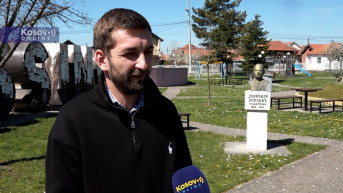
Political scientist Ivan Tomic assessed that the decision of the Government of Kosovo to grant a 13th salary to public sector employees has no economic basis in gross domestic product or fiscal policy, but instead represents a direct political instrument of Kosovo Prime Minister Albin Kurti to win over voters.
Tomic told Kosovo Online that the timing of this decision clearly indicates the authorities’ intention to influence the electorate.
“The decision to grant a 13th salary to public sector employees this year certainly has no clear economic foundation, especially when taking into account both the gross domestic product and Kosovo’s public fiscal policy. Rather, this move by Albin Kurti can be interpreted exclusively as a political instrument through which he tried to win over voters, because if you look at the timing, this decision was made just before the elections, which means that he wanted to influence the electorate in this way,” Tomic said.
According to him, the measure is discriminatory, as it applies only to the public sector, thereby deepening the gap between employees in institutions and those in the private sector.
“The decision can be seen as discriminatory, especially considering that the 13th salary is granted only to public servants and not to those in the private sector. In this way, Kurti wanted to directly influence voters in the public sector, who are known to be the most organized and the easiest to influence,” Tomic said.
He recalled that this is not an isolated case, but part of a broader pattern of actions ahead of elections in Kosovo.
“Many other things that happened just before the elections – from public calls for the allocation of construction materials, through various projects, to job vacancy announcements – were all timed within a certain political framework in order for Kurti to gain votes,” Tomic noted.
Although the authorities present this decision as a measure to improve living standards, Tomic emphasizes that it is a one-time benefit that does not solve citizens’ fundamental problems.
“It is short-term. It may help people repay some debts or meet certain obligations, but in the long term the problem of inflation remains. Prices continue to rise, while wages in both the private and public sectors remain the same. These are issues that require additional attention and systematic solutions, rather than ad hoc measures when it is politically convenient,” Tomic concluded.



0 comments