
Trifunovic: Indictments against Serbs are arbitrary, we no longer know what we can be accused of
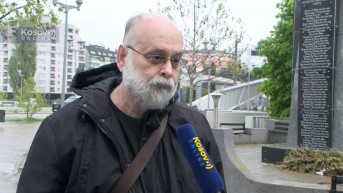
Former prosecutor Nenad Trifunovic tells Kosovo Online that indictments brought against Serbs for alleged violations of Kosovo's constitutional order are clearly unfounded and that it is evident that their sole purpose is for Serbs to leave Kosovo and for those who wish to return not to do so.
"It is obvious that all of us are somehow endangered because when we reach a point where we no longer know what we can be accused of, then we are in a position where every Serb is guilty simply for being Serbian and Orthodox and for being a nuisance to someone in this area," Trifunovic says.
He points out that the indictments against Serbs are random and arbitrary, sometimes related to situations where an Albanian has a property dispute with a Serb.
"Suddenly, after 25 years, someone remembers that this person committed some war crime, and we all clearly see that the sole purpose of these indictments is to eliminate that person from Kosovo, and not only them but also anyone else who would like to return or for those who are there to leave Kosovo. When we look at the statistics, unfortunately, we see that there are fewer and fewer of us, people are confused and scared, both for themselves and for the future of their families," Trifunovic emphasizes.
Regarding Kosovo's constitutional order, Trifunovic notes that it must start with Resolution 1244, and considering that, he says Kosovo's Constitution is "in serious trouble" because Kosovo's independence was not achieved through agreement.
"Resolution 1244 is very clear that Kosovo's future status can be reached by the agreement of all parties – Serbian, Albanian, and the international factor, meaning the great powers that would have to confirm such an agreement in the Security Council with a new resolution. Therefore, when we talk about Kosovo's constitutional order, I must put a big and serious question mark there. What is Kosovo's constitutional order, can it be called that, and is it in accordance with Resolution 1244?" Trifunovic states.
Commenting on the fact that Serbs in Kosovo prisons wait a long time for judgments without the possibility of defending themselves freely, our interlocutor says that there have been several examples of acquittals following "intervention by the US ambassador."
"We are in a situation where this judiciary, which should be objective, impartial, and independent, is not at all. I would point out the case of Pantic, where the Americans directly intervened by directly influencing the prosecutor and judge who turned Pantic's detention at Jarinje, if it can be called that, into house arrest. If we have an acquittal somewhere, it's in the case of Todosijevic, and maybe it will be in Pantic's case because they have literally exceeded every measure there," Trifunovic assesses.
He also emphasizes that the current situation is a result of the shutdown of Serbian institutions in Kosovo, such as the police, judiciary, and civil protection.
"We have brought this situation upon ourselves because, before that, we had a very small number of convictions. In 2002, there were two, in 2015, five or six, and after the closure of our institutions and entry into Kosovo's institutions, where unfortunately we were mere actors and which were not credible, we have come to a situation of hyperproduction of such indictments, and I fear that this will unfortunately continue in the future," Trifunovic says.


0 comments