
Trifunovic: Individual crimes are not genocide; threats of lawsuits put pressure on Serbia and Serbs in Kosovo
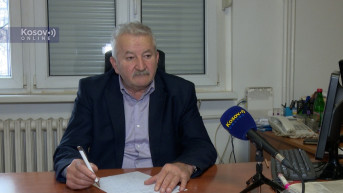
Lawyer Djordje Trifunovic, former president of the Military Court in Belgrade, assesses that the Institute for War Crimes in Pristina will serve as preparation for a genocide lawsuit against Serbia but also as additional pressure on Serbia and Serbs in Kosovo.
"The announced formation of the Institute for War Crimes in Kosovo is evidently aimed at preparing a lawsuit for genocide against Serbia. The criminal act of genocide, crimes against humanity, war crimes against civilian populations, the wounded, sick, and prisoners are part of international criminal law. It is based on adopted conventions that states ratified long ago. I don't know if Kosovo has done that," Trifunovic says.
Trifunovic believes that by reviving the lawsuit for genocide against Serbia, Kosovo simultaneously wants to present itself as part of the international community.
"They want to present themselves as part of the international community that recognizes international criminal law and to gain points for their statehood. But, at the same time, it is a constant form of pressure on Serbia and its people. Every now and then, they arrest someone and put them in custody for alleged war crimes, which happened 20 years ago, but it becomes relevant to talk about it. This has an effect and creates privileges and tolerance in parts of the international community," Trifunovic says for Kosovo Online.
Trifunovic says it's possible that during police and military actions in Kosovo in 1998 and 1999, individual excesses or crimes were committed, meaning that international conventions were not always followed.
"But such excesses do not lead to genocide. This needs to be discussed, data needs to be collected. Now, how they will do that, whether they have the conditions or not, is a question. In any case, an armed rebellion erupted in Kosovo, and our policy at the time classified it as terrorism, which I thought was wrong. Preventing armed rebellion gives authorities full capacity, but in police actions against terrorism, it's not the same. For there to be a possibility for Serbia to be exempt from obligations to abstain, it needs to declare partial war status in Kosovo and then fully apply the army. That was my stance, but why it wasn't like that is a tough story," Trifunovic explains.
He points out that there is a series of international decisions and conventions that clearly define the issue of genocide, and that Kosovo decided to use it as a form of pressure against Serbia, although, as he claims, the question can be raised whether it was the Albanians who committed the crime of genocide against the Serbs.
"Genocide is proved by the existence of orders, political decisions, and perpetrators. If someone is systematically relocated, if someone's water and electricity are destroyed, if someone is forced to move - then that's genocide, and I don't know if such a thing existed. The question is how the Serbian side fared there, whether that's genocide? Is genocide the forced dispersal of Serbs, poisoning of food and livestock, cutting down orchards and forests, and children going to school with escorts?" Trifunovic says.
He believes that investigating war crimes must not be disputed, hence the establishment of the Institute for War Crimes in Pristina, but that the problem lies in the legal formulation of such criminal acts.
"War crimes can only be committed during war, but genocide and crimes against humanity do not require war because they involve the systematic, planned destruction of a national, religious, or ethnic group, and there doesn't need to be a war for that. Here, the condition for a crime is that there is a war, with the state declaring it, and as far as I know, they declared themselves a state, and some recognized them, but we haven't. Hence, the relationship with that institute is very specific and difficult, as is the entire issue with Kosovo," Trifunovic says.


0 comments