
Trifunovic: Kurti's announcement that he will sue Serbia for war crimes in Kosovo has no legal basis
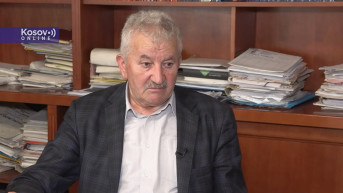
Former president of the Military Court in Belgrade, Djordje Trifunovic, assessed that the announcement by Kosovo Prime Minister Albin Kurti to sue Serbia for war crimes had no legal basis, but that despite that, he would try in every way to bring it up either through the UN or the Council of Europe.
"There is no possibility of a lawsuit for war crimes against the state of Serbia. That falls within the realm of individual responsibility. There must be a factual perpetrator of a crime and their commander, either of the first or second degree. It cannot go beyond that. When it comes to genocide, that's something different, but this is a specific crime for violations of the rules of war," Trifunovic says.
He explains that everything is regulated through the Hague and Geneva Conventions, and these legal provisions also exist in the Serbian judiciary.
"Our judiciary and military law from earlier times recognized the so-called command responsibility through what is known as the War Rule. Indications were introduced on how it is established and in what way superiors are responsible for the actions of subordinates. But there is absolutely no consideration for a trial against the state itself," Trifunovic states categorically.
He warns that in Kosovo, when it comes to announcements of lawsuits for the most serious criminal offenses against Serbia, it is increasingly stepping out of the domain of law.
"Most of these are statements by politicians. I would like to hear from someone who truly deals with this topic, and then we can discuss it. I cannot comment on statements by politicians."
He assesses that Kurti's repeated claims that special legal teams are working on lawsuits against Serbia are solely aimed at approaching Kosovo's recognition by the international community.
"They need such a procedure to show that they are a state. That's its function. Those people from the prosecutor's office probably do what they can and what is available to them. I don't believe there is any other context except the political one," Trifunovic says.
He does not doubt that Kurti will try to bring up the issue of a genocide lawsuit against Serbia.
He believes that membership in the Council of Europe would help Kosovo in this endeavor.
"It would certainly be easier for them to do so when they become members of the Council of Europe because they gain certain international positions. But war crimes are individual responsibility, and there must be an executor. They have previously announced that they have 33 indictments, covering 89 individuals. I don't know if that relates to this or something else. It is hard to distinguish," Trifunovic says.
He also has no doubt that Kosovo will raise a similar issue before, during, and after the debate and vote on the new resolution on Srebrenica planned at the UN General Assembly.
"Of course, they will use everything they can to portray us in a bad light. We have not recognized them as a state, they are not recognized as a state in the UN. The right to prosecute each other is reserved only for sovereign states. And the fact that they are recognized by some countries still does not give them the status of a UN member, they are not yet in the Council of Europe. In any case, they slowly, step by step, put themselves in a more favorable position," Trifunovic emphasizes.
He adds that the UN General Assembly session will be an ideal opportunity for the authorities in Pristina because, as he emphasizes, Serbia is currently in a difficult international situation.
"That circle of deciding on Serbia's genocide against other peoples has failed. It was not accepted. Those centers of power have not reconciled with that and always seek a solution to renew. Lately, things have not been going well for us internationally. I assume that's its function, to put back on the agenda something that has already been rejected. Otherwise, what was not accepted then does not have the character of a settled matter," Trifunovic explains.
Asked whether Kurti's message to prosecutors to be fully engaged in prosecuting those responsible for war crimes should also be interpreted as an announcement of new arrests, Trifunovic says that the authorities in Pristina have used every opportunity for that so far.
"They arrest for much smaller events and significant things. I do not believe in their sincerity and accuracy in these proceedings. It has been shown many times that all these proceedings are somehow constructed. The state needs to pay attention to this, to provide assistance to all people who were mobilized, engaged, or were active military personnel. They should be allowed access to archives to facilitate their defense. Otherwise, if Serbia abandons them, then there is no help for them if they are arrested," Trifunovic assesses.
He also claims that the best solution would be for such processes in Kosovo's courts to receive some form of neutrality.
"It would be logical for these processes to proceed with some form of neutrality. One belligerent cannot judge another. That is excluded. However, the Hague Tribunal has agreed that local courts discuss individual cases. Both in relation to opponents and their own members. Every state should prosecute war crimes regardless of who it is, whether it is a domestic or foreign citizen. It is not written anywhere that they cannot be prosecuted and that justice cannot be sought," Trifunovic emphasizes.


0 comments