
The United States calls for the implementation of the Ohrid Agreement
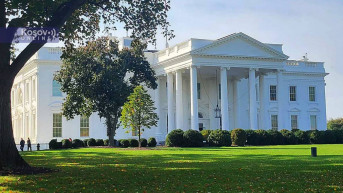
The Agreement on the Path to the Normalization of Relations between Kosovo and Serbia, reached in February 2023 with the mediation of the European Union, represents a positive step toward normalizing relations between the two sides, which “should strive for rapid progress in the implementation of the Annex to that agreement,” according to the National Defense Authorization Act, adopted by both chambers of the US Congress and signed on December 18 by the President of the United States, Donald Trump.
As reported by Radio Free Europe, the document emphasizes that, after sufficient progress has been achieved, the United States should consider initiatives to strengthen bilateral relations with both countries, including a strategic bilateral dialogue and concrete initiatives to deepen economic ties and investment.
According to the Act, the United States should continue to support a comprehensive and final agreement between Kosovo and Serbia, based on mutual recognition, without supporting territorial exchanges, partition, or other border changes along ethnic lines in the Western Balkans, and should also support pluralistic democracies in the region in order to prevent a return to ethnic conflict.
The National Defense Authorization Act for fiscal year 2026 authorizes record annual spending for the US military in the amount of 901 billion dollars, which is eight billion more than requested by the Trump administration.
The document covers a range of issues – from the procurement of ships, aircraft, and missile systems, to increasing soldiers’ pay and addressing geopolitical threats.
The text pays particular attention to the dependence of Western Balkan countries on Russian energy, assessing that this dependence links their economies and politics to Moscow and hampers European integration. At the same time, it notes that corruption, including at the highest political levels, remains one of the greatest obstacles to the region’s further economic and political development.
The Act emphasizes that reducing the Western Balkans’ dependence on Russian gas and fossil fuels is in the national interest of the United States, and that Washington should support the membership of countries in the region in the European Union and NATO.
It also warns that the growing influence of China in the Western Balkans may have negative consequences for strategic competition, democracy, and economic integration with Europe. For this reason, US institutions are required to regularly report to Congress on the malign influence of Russia and China in the region.


0 comments