
Vucic: Disappointed by the failure to implement the Brussels Agreement – it was signed by the EU, yet the Association of Serb-majority Municipalities still does not exist
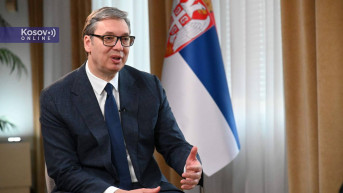
Serbian President Aleksandar Vucic said in an interview with the Viennese daily Die Presse that he is disappointed with the European Union, primarily because the 2013 Brussels Agreement has never been implemented despite having been signed under the auspices of the EU's highest representatives. He reiterated that Serbia remains firmly committed to its European path.
In the first episode of the podcast Masterclass with Rainer Nowak, hosted by Die Presse Editor-in-Chief Rainer Nowak, Vucic said Serbia had fulfilled all of its obligations under the Brussels Agreement, while the other side had failed to implement its only obligation—the establishment of the Association of Serb-majority Municipalities (ASM).
He recalled that during the EU–Western Balkans Summit in Tivat, he met with Friedrich Merz, Emmanuel Macron, Ursula von der Leyen, and António Costa, where they discussed various issues before asking him a single direct question—whether Serbia was still genuinely committed to the European integration process.
"I anticipated what was coming. They asked me: 'Are you still genuinely interested in the European integration process?' It would have been easy for me to criticize them because Cluster 3 has not been opened. I told them that I was disappointed by many things, especially what happened after 2013 when we signed the Brussels Agreement. We fulfilled all of our obligations. The other side failed to fulfill its only obligation, which had been a precondition for signing the agreement—the establishment of the Association of Serb-majority Municipalities. More than 13 years have passed. The European Union stood behind that agreement, its highest official signed the document, yet it has never been implemented. There are thousands of reasons for disappointment, just as there are disappointments on their side. In the end, Serbia remains on the European path, and that is where I want to see Serbia—in the European Union. Let me be crystal clear—without any 'buts'," Vucic said.
Asked whether he perceived arrogance in Brussels, Berlin, or Vienna, Vucic said he could not say that of Ursula von der Leyen or António Costa, but added that he had witnessed much of it in Austria. He stressed that he was not referring to Austrian Chancellor Christian Stocker, whom he described as a courteous man with whom he had held several meetings.
"An atmosphere has been created that says: 'We have our own objectives, we need to remove Vucic and find someone else who will serve our interests.' That is not fair. Many falsehoods have been spread throughout Austrian society. We regard Austria as a friendly country and count on maintaining long-standing friendly relations, even though some Austrian officials interfered in our internal affairs by supporting a revolution in the streets—something we have never done with your country," Vucic said.
Speaking about his recent participation in the Southeast Europe–Ukraine Summit in Kyiv, Vucic recalled that it was his fifth appearance at that format and said discussions focused on a number of issues. He emphasized that he had spoken about respect for the Charter of the United Nations, UN resolutions, and support for the territorial integrity of Ukraine, as well as that of all other countries, including Serbia.
"We also discussed Serbia's humanitarian assistance in three areas—financial, healthcare, and energy support. Most recently, we reached an agreement, which was important both for us and for President Zelenskyy, that Serbia would undertake the reconstruction of a small town in Ukraine. I hope we will also have the opportunity to host him in Serbia on a bilateral visit," Vucic said.
He added that he had also discussed mutual support for the European integration process with the Ukrainian leadership.
"I told them they have Serbia's full support. If they need anything, Serbia will support them. I also spoke about an idea I had previously discussed with Italian Minister Matteo Salvini—connecting Trieste, Croatia, Serbia, Romania, Moldova, and Ukraine by road and rail. These are transport corridors we had never previously considered. I believe we will one day receive support for this project," Vucic said, reiterating his hope that Ukrainian President Volodymyr Zelenskyy would visit Serbia.
Commenting on what the interviewer described as Russia's "aggressive reaction" to Serbia's cooperation with Ukraine, Vucic said the situation demonstrated how democracy functions.
"I did nothing that I had not already been doing a year earlier, except for traveling to Kyiv. Here at home I was criticized by many people who care more about the interests of other countries than those of Serbia and who asked me: 'Why did you go there?' I replied to everyone, including my Russian friends: 'What has Ukraine done against Serbia? Tell me. It has not recognized Kosovo. What has it done against us? They are Slavs, they speak a similar language—what do we have against them?' When you ask that question, there is no answer," the Serbian President said.
He added that from time to time "so-called analysts" appear who believe Serbia should act more in the interests of other countries than in its own, but said he does not respond to such criticism because his responsibility is to protect Serbia's national interests.
"That is not easy, because we must preserve our friendships with Asian countries, including Russia. We cannot oppose someone simply because somebody else opposes them. I see no reason why we should not cooperate with Ukraine," Vucic said.
He reiterated that Serbia remains militarily neutral.
"I want peace. We are on the European path. People say we are balancing, and you can balance in many things, but not when it comes to your future. The European path is our strategic objective. There is no alternative path for us. That means we must cooperate closely with all candidate countries. The conclusion is simple," Vucic said.
Vucic also stated that no European leader in recent history had endured what he had experienced over the past several years and claimed that numerous allegations made against him had ultimately proven to be false. He predicted that his political camp would prevail in elections expected in three months.
"I believe that no European leader has gone through what I have in recent years. There was an enormous amount of disinformation, including from media outlets in your country. The Jovanjica affair—three years of constant attacks against me. They lied about the so-called sonic weapon. That narrative spread to your country as well. It was one of the biggest lies. They also falsely accused me of involvement in killings in Sarajevo. Nothing was ever enough. In the end, all of those allegations proved to be false. But then who explains to the public that they had been misled by stories that outraged people? That is unfair," Vucic said.
He said he had overcome those challenges through months of hard work and dedication.
"Now I can say that in three months we will win elections that will be more democratic than those held in many other countries. If that is considered a sign of autocracy, I would disagree. You cannot win without a plan, a program, capable people, and a genuine desire to develop Serbia and strengthen its economy," Vucic said.
The Serbian President said Serbia had achieved significant progress over the past decade.
"When you visited Serbia in 2017, it was the third year of my IMF reform program. At that time, Serbia ranked fourth in the region in terms of average salaries and pensions. Montenegro's average salary was 50 percent higher than ours—€490 compared with Serbia's €340. Bosnia and Herzegovina was 22 percent ahead of us. Today, Serbia has overtaken all of them," he said.
Vucic added that Serbia's public debt is now significantly lower than that of many neighboring countries.
"Our average salary has now reached €1,050, compared to €1,020 in Montenegro. Serbia accounts for 57.1 percent of the Western Balkans' total exports to the European Union, attracts more than 60 percent of all foreign direct investment in the region, and generates more than half of the Western Balkans' total GDP. If we are discussing the Western Balkans, then Serbia and its contribution must be at the center of that discussion. These are the results of hard work," he said.
Asked why the flags of Serbia and the European Union stand side by side in his office and whether EU membership remains Serbia's objective, Vucic replied affirmatively, stressing once again that Serbia remains on its European path and that the European Union is where he wants to see the country—without any reservations.
He also addressed proposals to reduce working hours and the number of working days, saying he opposes such measures because they would undermine competitiveness, particularly in comparison with Asian economies.
Asked whether he regarded this as a specifically European phenomenon, Vucic said yes, adding that he had discussed with German partners what he called "digital laziness" and the amount of time people waste each day using their mobile phones for non-work-related activities before later complaining of exhaustion.
"Everyone thinks the same thing, but no one is willing to say it publicly because they would immediately face criticism," Vucic said, arguing that such attitudes are among the reasons Europe has fallen behind many Asian countries.
He added that people often find it easier to mow the lawn, beautify their gardens, go for walks, or jog every day than to devote themselves to productive work.
"We must change our mindset and think about the future, about the economy, and about working harder. Nothing falls from the sky," the Serbian President stressed.
Vucic also rejected the notion that Germans are more successful because of the Protestant work ethic or because they are inherently more intelligent.
"I believe they worked harder during periods when we did not. Today we have narrowed the gap, and I am pleased about that, but I am still not satisfied. We still possess the ambition that many in Europe have lost. Today many people analyze everything around them and enjoy life as if living in the era of the Western Roman Empire, without looking beyond their own borders. We see everything and aspire to improve our position. That is why we are prepared to fight harder than you are. But all Europeans must become more determined," Vucic said.
He announced that one of the central messages of his upcoming election campaign would be the need for harder work, agreeing with the Austrian journalist that such a campaign message is unusual before elections.
Asked about Expo 2027, Vucic said the event represents part of a broader vision and is about much more than hosting a single international exhibition.
"For the first time, a railway line will connect the airport, the city center, and the Expo site. We are building more roads than ever before. Between 1945 and 2012, Serbia built 596 kilometers of motorways and expressways. Since then, in just 13 years, we have built 651 kilometers—more than in the previous 70 years combined. Within the next year to year and a half, we will build more than 1,000 kilometers of motorways and expressways. Thirteen years ago Serbia's GDP stood at €32 billion; this year it will exceed €100 billion. We are still poorer than Austria, but we are in a far better position than before. We simply need to continue working even harder," Vucic concluded.
0 comments