
Vucic: The image of the UN Security Council does not reflect the real distribution of power in today's world
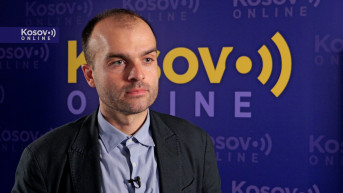
The United Nations no longer represents a realistic picture of the world in terms of the balance of power, most visibly in the composition of the Security Council, the UN’s main body and the only one that can adopt legally binding acts that states are obliged to respect. For this reason, discussions about possible UN reform are essentially centered on reform of the Security Council, which, in practice, functions the worst, Mihajlo Vucic, senior research fellow at the Institute of International Politics and Economics, told Kosovo Online.
“The composition of the UN Security Council, with permanent members France, the United Kingdom, Russia, the United States, and China since the 1970s, does not reflect the real distribution of power in today’s world, in which India, South Africa, Brazil, and others have also become great powers,” Vucic noted.
The current problems with the UN’s functioning, he explained, are primarily rooted in its structural organization, since it was created in the aftermath of World War II, when the victorious powers decided, based on their role as winners, to establish an organization that suited them and their political agenda at the time.
“In the first 30 years of the UN’s existence, we even had a situation where one great power, like China, was not a member of the Security Council at all, that role was performed by Taiwan,” he reminded.
Proposals for reform of the Security Council, Vucic pointed out, are not new, some practically go back to the UN’s founding, since it was clear from the outset that certain things would not function properly and that changes might be needed. Such proposals have come both from permanent members of the Security Council and, even more often, from those seeking membership or a redistribution of power within the body.
According to him, three kinds of proposals emerge from Security Council members:
“One is to keep things more or less as they are now, which is basically the US position, since it seems they don’t see a way to include some of their allies in the Security Council to improve the UN’s functioning. The fact is that the entire post–World War II system of international relations is essentially a creation of the US and its allies. That system suits them, and we’re not only talking about the UN here, we can also talk about the World Bank, the International Monetary Fund, and so on,” Vucic explained.
The second type of proposal, mainly from Russia and some states that occasionally align with it, like China or others outside the Security Council, calls for partial reform, possibly introducing new members but without granting them the same full rights as existing permanent members.
“These proposals mostly envisage expanding the Security Council to include countries demanding more multipolarity in the world. These are largely what we once called Third World countries, but in reality, they are very much First World today in terms of economic development, yet their power is not reflected in international organizations. Think of India, South Africa, or some Latin American countries. That proposal is legitimate, but the question is why bring in new members who would not enjoy the same rights as current ones, since these proposals don’t foresee granting them the veto, i.e., the ability to block Security Council decisions. I don’t see who would be interested in that,” Vucic said.
The third type of proposal, according to him, comes from France, a permanent member of the Security Council that tries to balance between the two opposing camps.
“France supports admitting some new member with equal rights, but generally proposes states it is certain would work with it in line with its interests, Germany, for example, its main ally in international relations as an EU member. So none of these reform proposals are really aimed at improving the Security Council’s efficiency, they are simply topics for debate, and these debates are endless and lead nowhere,” he observed.
In this sense, Vucic said, the outlook for the UN’s role in international security is very bleak, and for many years it has been evident that the center of decision-making on security issues has shifted outside the UN, limited to a narrow circle of great powers deciding at their own diplomatic summits, such as the US–Russia presidential meeting in Alaska or the Russia–China presidential meeting in Beijing.
“That’s where key decisions are made, while the Security Council is more of a show for the public, where we can hear nice diplomatic discussions but no real decision-making takes place,” Vucic said.
However, he stressed that we should still view the UN as something that has brought much that is positive to the world, since its activity goes far beyond security. He recalled that the UN has created numerous agencies and organizations addressing issues essential to human life on the planet, from the environment, cultural heritage, and food shortages to eradicating poverty and protecting water, air, and energy, and has been very successful in those areas.
“In these 80 years, the UN has managed to raise the quality of life of ordinary people to a much higher level than in 1945. It has also helped states cooperate more on these issues through the adoption of numerous international treaties under UN auspices, treaties that are applied in international relations and are rarely violated. And when they are, states accept certain sanctions,” the legal expert said.
Although the most common narrative about the UN in the media and public opinion is a critical one, arguing that it has failed to fulfill some of its founding goals, Vucic said such criticism is partly based on the fact that the UN set itself goals it could not realistically achieve, above all control over international security. He reminded that the UN succeeded the League of Nations, which was based solely on the idea of security control, and that this organization eventually collapsed because its members no longer believed it was needed.
“The League of Nations fell apart after some 20 years, while the United Nations has survived 80 years, and as things stand, it won’t collapse anytime soon. That very continuity shows that it still serves a purpose,” Vucic concluded.
The General Debate of the 80th session of the UN General Assembly begins tomorrow. In this jubilee year, the theme of the general debate is ‘Better Together: 80 Years and Beyond for Peace, Development, and Human Rights.’

0 comments