
Vucic: The West’s loud silence on the expulsion of Serbs from Kosovo and Metohija
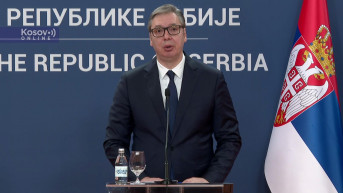
President of Serbia Aleksandar Vucic stated this evening that a systematic and organized campaign by the Pristina authorities is currently underway in Kosovo, supported by the loud silence of the international community—primarily Western countries—aimed at quietly expelling the Serbian people from their ancestral homes.
Speaking on RTS and commenting on the recent attack by an Albanian police officer on a Serbian high school graduate, Vucic noted that while some political actors—though a minority—are disturbed and increasingly uneasy about Albin Kurti's actions, the broader Western silence remains conspicuous.
“We must understand that what is happening is a deliberate and systematic campaign by the Pristina authorities, backed by the loud silence of what we euphemistically call the 'international community'—namely, the West. They remain silent in the hope that the Serbian people will be expelled from their centuries-old homeland in silence. However, Kurti’s actions are causing unease and growing nervousness not only among some Western officials, albeit a minority, but also widely in the East,” Vucic said.
He emphasized that Serbia must politically leverage this situation to resist what he called a fierce offensive by Albanians, supported mainly by some Western powers and Turkey, to secure further recognitions of Kosovo’s independence.
“It’s difficult to oppose this. We don’t have the financial resources they do. We don’t possess the tools or weapons they use to buy votes or recognition. We don’t have the whip with which they threaten others. But we are resisting. And soon, I will inform the public of positive and surprising outcomes—a small country is achieving remarkable results in this struggle. There will be good news for our people in Kosovo and Metohija and for Serbia as a whole regarding our international position, territorial integrity, and the number of countries that do or do not recognize Kosovo,” he added.
Vucic said that life is difficult for Serbs in Kosovo, but the Serbian state seeks to help not just with declarations, but by taking concrete steps—for example, offering support to those dismissed from work or banned from employment, to ensure their livelihood.
When asked about the Belgrade–Pristina dialogue and statements from EU officials, Vucic stressed that while references to dialogue as the only solution are ever-present in Western rhetoric, outright condemnation of Pristina's actions remains rare.
“Everyone who comes to visit us—or wherever I travel—never fails to lecture us about Banjska and the death of one police officer. But they never ask what happened to the Kosovo Security Force member who shot two Serbian boys in Strpce. That’s just how it is. We must get used to it. We must be strong, we must fight, and we must resist,” Vucic emphasized.
He added that while Serbia is not a large country, it can achieve significant things through determination and resilience.
Concern Over Bosnia and Herzegovina
Vucic also expressed deep concern within Serbia's leadership over the situation in Bosnia and Herzegovina, particularly with regard to the Republic of Srpska, highlighting the immense external and internal pressure it is facing.
“Sanctions have even been imposed on the grandchild of Milorad Dodik—who was only two years old at the time. When decisions are imposed externally and there is no room for genuine dialogue, and no one wants to hear your side, only pushing for full centralization, you end up with serious problems. Serbia will give its full support to the preservation of the Dayton Peace Agreement,” Vucic said.
He added that Serbia will do everything in its power to preserve peace and stability and will seek to influence all relevant actors to ensure those are not undermined.
“But is there justice in this? No. And we must get used to that as well—and expect more of it in the future,” Vucic stated.
Uncertainty Over EU Accession Talks
Vucic also said he does not know when the European Union will open Cluster 3 in Serbia’s accession negotiations and emphasized that political motives always underpin the decision to open chapters and advance along the EU path.
“They’ll continue saying that everything must be merit-based. That has never truly been the case—never in history. And the more often they say it, the clearer it is that it’s not true. But our job is to fulfill what we’ve promised,” he noted.
Vucic added that Serbia has committed to adopting a set of media laws, forming a new REM Council, and implementing ODIHR recommendations regarding the electoral process.


0 comments