
Vujinovic: Burns' visit aims to calm the region, a message to Pristina that the bridge will not be opened
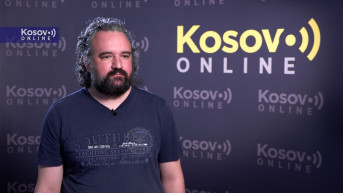
Security studies researcher Nikola Vujinovic says that the unexpected visit of CIA Director William Burns was organized to calm the region, adding that the main message to Pristina is that the bridge over the Ibar River will not be opened, nor that there will be any violence.
"I can interpret Burns' visit in two ways. On one hand, it is yet another signal to China and Russia that this region belongs to the US and NATO. In addition to Belgrade, he visited Sarajevo, Banja Luka, and Pristina – cities that are very significant to the Serbian side, which is often perceived as pro-Russian. Even if not in terms of government, then certainly in terms of the citizens, who largely support Russia's policies in Eastern Europe. That is one side. On the other hand, I believe that the reasons for his visit vary from country to country, depending on the local context," Vujinovic said.
Regarding Bosnia and Herzegovina, he believes the purpose of the visit was to ease the pressure that Republika Srpska is exerting on the central government over property issues.
"As you know, the US Embassy in Sarajevo supports the central government, which wants all property to belong to Bosnia and Herzegovina, even though that is not in line with the Dayton Agreement, where the property belongs to the entities. In Belgrade, aside from the issue of Kosovo, the focus was also on the potential 'Color Revolution.' We've seen in recent days significant and confirmed information in the media about funding various NGOs for protests, which is why I believe the CIA director had to come and assure our officials that there is no talk of a 'Color Revolution' and that any such rumors are merely attempts by Russia or China to destabilize our relations," the researcher explained.
As for Pristina, Vujinovic reminds us that the election campaign is underway, characterized primarily by violence against the Serbian community.
"Kurti doesn't hesitate to raise the level of violence daily – sometimes it seems even hourly. I believe the CIA director came primarily to reassure us that there would be no radical moves, such as opening the bridge on the Ibar between South and North Mitrovica. On the other hand, perhaps it is a bit colloquial to say, but I think he came to give the Albanian structures a stern warning, to bring them back in line because the situation in Eastern Europe is becoming increasingly complicated. It is heading in a negative direction for both Europe and its Western allies, so I believe the CIA director came as a sort of disciplinarian to say, 'Calm down, kids,'" Vujinovic said.
He adds that it was more of a security-focused visit than a political one.
"There were no announcements or statements, so it was about operational matters. Our security structures in Belgrade likely insisted on or presented certain data that the Americans did not expect us to have or were unaware of, particularly concerning Kurti's government's plans. I'm optimistic that this visit will bring some calm to the region," the researcher emphasized.
When asked if Burns came to inform, warn, or reprimand, Vujinovic says he believes that, like all Americans who are very operational, Burns came to do all three.
"He came to highlight certain attempts at foreign interference in the region, particularly from Russia and China. On the other hand, he came to warn actors that they should adhere to certain agreements that were previously reached and not challenge US authority, especially just a few months before the election of a new administration, which is an extremely sensitive time. In conclusion, I believe that this visit will have a positive impact on the security of the region. If, despite it, particularly in Kosovo and Metohija, Kurti's so-called temporary Albanian government continues to act as it has, since it clearly has nothing else to offer its voters other than violence against Serbs, this will speak more about the weakness of the US and will open a new phase of conflict in the Balkans," Vujinovic emphasizes.
For Vujinovic, it is common for visits of this nature not to be mentioned in the media at all.
"We don't know how many times the CIA director has visited Belgrade. The fact that this visit was mentioned in the media, without any discussion of the content of the talks speaks to two things. First, it was necessary for the public to be aware that the visit took place but that the topics were not for public consumption. I was surprised that it was even mentioned in the media. Simply mentioning the CIA director's visit contributes to calming the situation in the region, where America controls most of the actors, except those in Serbia. In that sense, this was one of Director Burns' moves. However, I expected that they wouldn't mention at all that the CIA director visited the region," Vujinovic concluded.



0 comments