
Vujinovic: Different approaches of the US and the EU regarding the institutional crisis in Kosovo
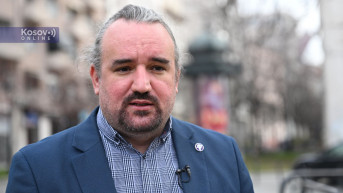
Security studies researcher Nikola Vujinovic said that the international community will not look favorably on a new institutional crisis in Kosovo, but that the approach of the European Union and the United States will be different.
Vujinovic told Kosovo Online that the EU will insist on an agreement, while the US could support Kosovo President Vjosa Osmani for another mandate.
“They will not look favorably on it, but we must make a distinction here. The European Union and the United States will have somewhat opposing views. By all accounts, Osmani is the favorite of the US and if this electoral crisis helps her gain new legitimacy, I think the US will support that. Meanwhile, the EU will insist, and I believe ambassadors have also advocated this with Albin Kurti, that some kind of agreement be reached and that new electoral procedures not be entered into, because that would delay certain things,” Vujinovic said.
As he stressed, if Kosovo enters a new political crisis, it will not be able to turn to the European Union or the United States for advice or a policy shift because there will be no legitimate institutions.
“I think the European Union will also insist with the Constitutional Court of Kosovo, not openly but through friendly channels, that a decision be made that is more acceptable for institutional stability, while the US would welcome new electoral procedures because I believe Osmani would gain even greater momentum with their support,” our interlocutor added.
As he noted, Kosovo’s relations with the EU and the US are already sufficiently poor, so in the event of a new crisis, it is unlikely that they would deteriorate much further.
The institutional crisis, Vujinovic says, could on the other hand lead to economic problems in relations with the European Union.
“With the European Union, certain economic problems could arise because as a caretaker government you cannot submit requests, as we saw during 2025, for certain funds to be paid out since you do not have legitimacy, although Kurti violated those rules several times,” Vujinovic said.
According to him, the economic crisis will not be so much conditioned by institutional instability because the budget has been adopted, but the arrival of money from the European Union will be uncertain.
“And that is the main investment momentum of the Kosovo economy, so from that side certain economic imbalances could arise, but the crisis as such will, I fear, depend more on the geopolitical circumstances of the war in the Middle East than on the institutional instability of Kosovo and Metohija,” he said.
Regarding financing from the EU Growth Plan for the Western Balkans, our interlocutor points out that the question is not whether the Growth Plan will be implemented, but which part of it.
“It will not be possible to implement it in full. Certain deadlines have already expired, while others are about to expire. If institutional instability continues, we can expect certain modifications. Of course, development funds of the European Union are always negotiated with the European Commission, so I would not be surprised, given that the European Union and the European Commission view Kosovo favorably as a state, which for me is very detrimental to the region. I think they may reach an agreement and modify the Growth Plan again,” Vujinovic concluded.



0 comments